· 10 min read
Used Louis Vuitton Speedy 30: Japan vs US Resale Prices
Japan's pre-owned Speedy 30 market is deep, well-graded, and structurally cheaper than US resale — here's the grade-by-grade breakdown that shows exactly how much.
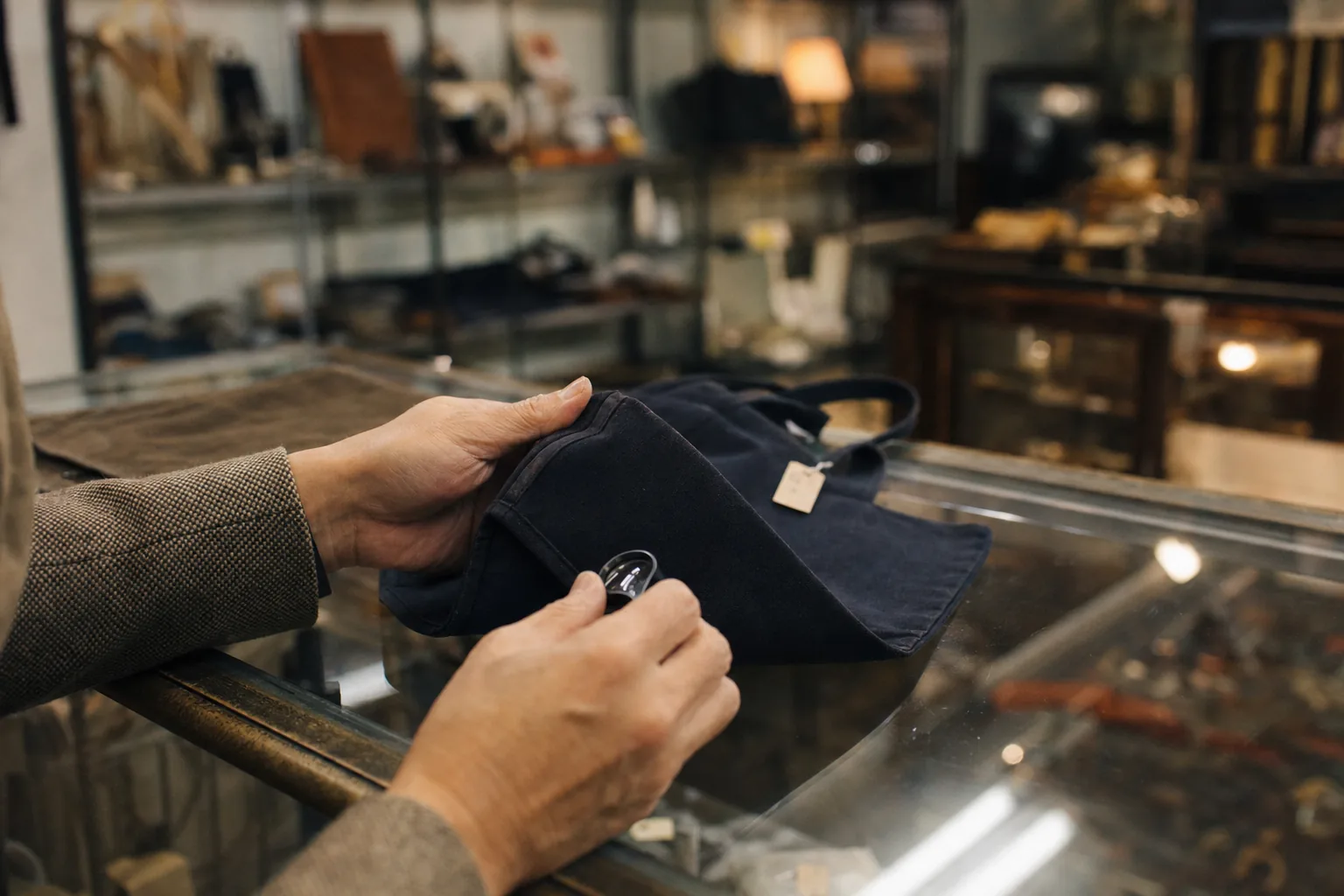
The Louis Vuitton Speedy 30 is the single highest-volume item in Japan's pre-owned luxury market. Louis Vuitton monogram canvas — the Speedy, Neverfull, and Alma — is the highest-volume category in Japan's resale market, which means supply is deep, competition between sellers is real, and prices reflect that pressure. For a US buyer, the result is a consistent and meaningful gap between what the same bag costs in Japan and what it costs at home.
Our November 2026 model price check — comparing Japan item price, our sourcing fee, shipping, and US duty against the median US resale price — puts the Speedy 30 about 28% cheaper landed from Japan. That figure holds across condition grades. Understanding why it holds, and which grade delivers the best value at that discount, is what this article is for.
Why is the Louis Vuitton Speedy 30 so popular in Japan's resale market?
Japan's domestic luxury consumption has historically been among the highest per capita in the world, which means the resale pool draws from buyers who purchased at full retail from authorized boutiques. The Speedy 30 was the entry-level Louis Vuitton bag for decades of Japanese consumers — bought as a first designer purchase, received as a gift, or acquired as part of a collection that has since been upgraded. That history creates an unusually large secondary supply.
Japan's secondhand fashion market topped ¥1 trillion for the first time recently, according to a study by Reuse Economic Journal, with sales of luxury vintage goods growing 16% in 2024. The Speedy 30 sits at the center of that growth: it is easy to authenticate, has a stable collector base, and turns over quickly. Licensed chain resellers keep significant Speedy inventory on the floor at all times, which compresses margins and keeps prices honest.
What does a used Speedy 30 cost in Japan vs the US by condition grade?
The comparison below uses Japanese yen prices observed at licensed Tokyo resellers (November 2026, converted at approximately ¥151 per USD) against the US resale median tracked by an independent pre-owned index. As of September 4, 2026, the median asking price for a pre-owned Speedy 30 across 134 live US listings was about $598, with most trading between $533 and $700. The Japan column is the item price before fees or shipping; the "landed" column adds a 10% sourcing fee, estimated shipping, and US import duty.
| Grade | Condition in plain English | Japan item price (approx.) | Approx. landed cost (US) | Comparable US resale price |
|---|---|---|---|---|
| N / S | Unused or virtually unused; no detectable wear | ¥150,000–¥200,000 (~$990–$1,320) | ~$1,200–$1,580 | $1,200–$1,600+ |
| SA / A | Lightly used; faint marks only under magnification | ¥90,000–¥140,000 (~$595–$925) | ~$740–$1,110 | $650–$1,000 |
| AB | Clearly used; visible corner wear or handle darkening | ¥65,000–¥90,000 (~$430–$595) | ~$545–$740 | $500–$700 |
| B | Noticeable wear, scratches, or hardware tarnish; fully functional | ¥35,000–¥65,000 (~$230–$430) | ~$315–$545 | $350–$600 |
The gap is widest at the A and AB grades — the most-traded condition tier. US resale prices for a Speedy 30 Monogram in good condition run $350–$600, rising to $650–$1,000 for excellent or like-new examples. A Japanese A-grade piece — which by Japanese grading standards exceeds what most US sellers would call "excellent" — lands in the US at prices that compete with the lower end of that range. That is the practical shape of the gap.
For the SA-to-A tier specifically, a Monogram Speedy 30 listed at a Ginza consignment specialist at ¥117,900 (approximately $780 at current rates) lands in the US at around $950 all-in — still below the $650–$1,000 bracket for equivalent condition on US platforms.
What does B-rank canvas actually look like on a Speedy 30?
B-rank is where Japanese grading conservatism creates the most value for informed buyers. Japanese graders use magnifying equipment to identify flaws invisible to the naked eye — a pinhead-sized mark that would never be mentioned in a US listing drops an item from Grade A to Grade B in Japan. That means a Japanese B-grade Speedy 30 often looks considerably better in person than the grade implies to a Western buyer.
On a Speedy 30, B-rank typically means one or more of the following: light corner scuffing where the canvas meets the leather trim, some handle darkening from skin contact, mild tarnish on the brass lock or zipper pull, or faint staining on the alcantara interior lining. The canvas itself — the coated monogram surface — is almost always intact, because it is the most durable part of the bag. Grade B, by Japanese standards, still represents what American buyers would call museum-quality condition.
Japanese price tags go further than the grade alone. Condition notes written directly on the tag — phrases like 角スレあり (corner scuffing present) or 金具くすみ (hardware tarnish) — specify exactly what the appraiser found. A B-rank bag with only a hardware tarnish note and clean canvas is a very different purchase from one with lining stains and corner wear, even though both carry the same letter.
Why does Japan have so many pre-owned Speedy 30 bags?
The supply comes from three converging sources. First, the bubble economy of the late 1980s and early 1990s drove mass luxury consumption in Japan, and a significant portion of those purchases were entry-level Louis Vuitton — Speedy 30, Alma, Neverfull. Many of those bags have been stored carefully for decades and are now entering the resale channel as their owners downsize or upgrade.
Second, the Speedy 30 has long been the most common Louis Vuitton gift item in Japan — given at graduations, promotions, and retirements. Gifted bags are often used infrequently, kept in dust bags, and eventually sold rather than passed on. This produces a steady flow of A and SA-grade pieces that were technically owned for years but show minimal wear.
Third, Japan's kaitori system — professional buying services that purchase pre-owned luxury directly from consumers — funnels this supply efficiently into the resale chain. Kaitori operates throughout Japan, acquiring goods from individuals, estates, and corporate liquidations. That inventory flows into the domestic resale chain: first to large chain resellers, then to specialist boutiques, and ultimately to licensed B2B auctions where dealers buy and sell among themselves. The result is a market where Speedy 30 supply is genuinely deep, and sellers compete on price to move volume.
Does the monogram vs Damier canvas affect the price gap?
Damier Ebene commands a slight premium over Monogram in Japan's resale market — typically ¥10,000–¥20,000 more at the same condition grade — because supply is thinner. The Speedy 30 Monogram (M41526) is the most-produced variant and therefore the most common in resale; the Damier Ebene (N41531) is less frequently gifted and less frequently traded, so sellers hold firmer on price.
In the US, the premium for Damier over Monogram is narrower. The Damier Ebene Speedy 30 in good condition runs $380–$620 in US resale, versus $350–$600 for the Monogram equivalent — an overlap that barely reflects the meaningful supply difference in Japan. The practical implication: the Japan price advantage is slightly smaller on Damier than on Monogram, because Japan's oversupply is concentrated in Monogram canvas specifically.
Epi leather variants sit in a different category entirely. Supply is thinner, prices are less predictable, and the condition variables (surface scratches on smooth leather are more visible than on coated canvas) make remote evaluation more important. The canvas Speedy 30 — Monogram or Damier — is where the structural price gap is most reliable and most consistent.
What condition grades are available and which offers the best value?
All grades from N through B are regularly available on the Japanese market for the Speedy 30. C-grade pieces exist but are rare in licensed chain stores — they appear more often in independent shops or at the lower end of domestic auction platforms. For most buyers, the decision is between SA/A and AB.
The Japanese pre-owned grading scale runs N (New), S (Almost New), SA (Excellent, minimal wear), A (Very Good, light wear), AB (Good, clearly used), B (Fair, noticeable wear), and C (Poor, heavy wear). For the Speedy 30 specifically:
- SA / A is the best grade for buyers who want a bag that looks essentially new and will hold resale value. The price premium over AB is real but justified if condition matters for future resale.
- AB is the most common grade in active inventory and the sweet spot for buyers who plan to carry the bag. The wear is visible but not disfiguring, and the price reflects the discount without reaching B-grade territory.
- B offers the deepest discount and is worth considering for buyers who understand exactly what the grade means — and who read the specific condition notes on the tag rather than stopping at the letter.
One structural advantage of the Japanese system that matters here: a B-grade item at one major chain will be in roughly the same condition as a B-grade item at a competing chain, because industry standards have normalized around shared expectations. That cross-store consistency does not exist in US resale, where "good condition" is seller-defined and platform-dependent.
Why is closing the price gap harder than it looks from the US?
Three things complicate direct access to Japan's Speedy 30 market for US buyers. The first is language: Japanese resale listings are written in Japanese, condition notes use Japanese-specific vocabulary (角スレあり, 金具くすみ), and the most competitively priced inventory moves through domestic platforms that do not accept international payment or ship abroad. Japanese luxury listings use a condition vocabulary, grading shorthand, and disclosure format that is structurally different from anything in Western resale.
The second is access. The B2B dealer auction layer — where the rarest and most competitively priced pieces trade — requires a kobutsusho license. Non-residents cannot hold the license, which means the deepest part of Japan's inventory is inaccessible without a licensed local partner.
The third is that even when a piece is found on an internationally accessible platform, the listed price is already adjusted for export demand. Sellers who list in English, accept international payment, and ship abroad price accordingly — the gap narrows significantly compared with domestic Japanese pricing. The true Japan price is the domestic yen price, not the export-adjusted asking price on an English-language storefront.
Is the Japan price advantage worth it after all costs are included?
Our November 2026 model price check puts the Speedy 30 approximately 28% cheaper landed from Japan versus the US resale median — after sourcing fee, shipping, and US import duty. That figure is specific to the Speedy 30 and reflects the model's unusually deep supply in Japan. The gap is real and durable, not an artifact of a single favorable exchange rate moment.
The yen's sustained weakness since 2022 has amplified the structural advantage further. A piece priced at ¥120,000 that would have cost around $900 at 2019 exchange rates costs materially less today at current rates, before any negotiation is factored in.
The gap does compress at the very low end. A B-grade Speedy 30 priced at ¥40,000 in Japan (~$265) will cost around $350–$380 landed, which is within reach of comparable US listings. The advantage is proportionally largest in the SA-to-AB range, where Japan's supply depth is greatest and US resale prices are highest relative to condition.
For buyers who understand the grading system, can read condition notes accurately, and have access to domestic Japanese inventory — the Japan price advantage on the Speedy 30 is one of the most consistent and repeatable value gaps in pre-owned luxury. The complete picture of how Japan's resale infrastructure creates these conditions is worth understanding before any purchase: the complete guide to buying second-hand luxury in Japan covers the kaitori supply chain, licensing structure, and auction access in full.