· 11 min read
Hermès Carré 90: Japan Pre-Owned Prices vs US
Japan's pre-owned Carré 90 market runs deeper than any other, and the price gap versus US resale is structural — not seasonal.
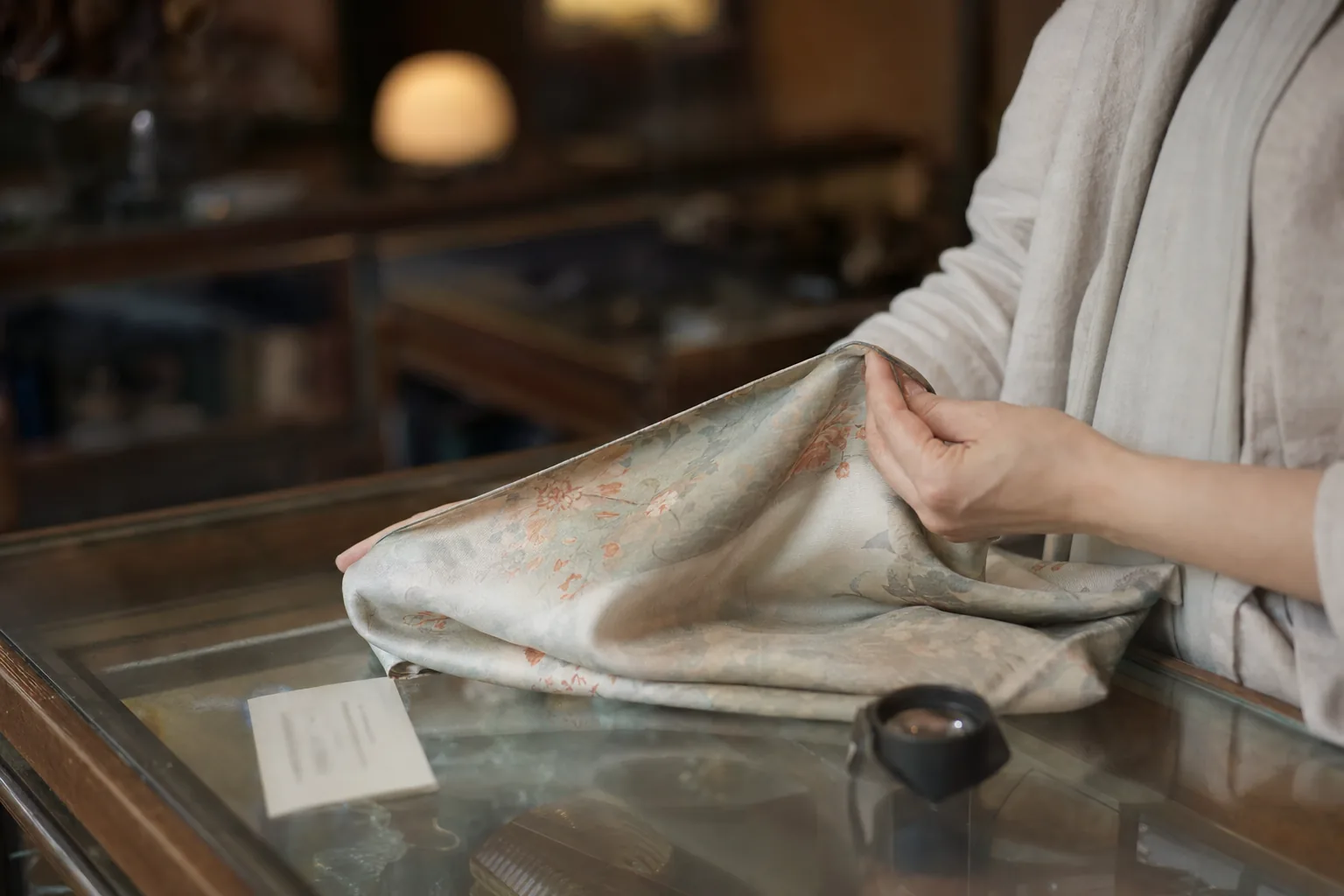
Why does a used Hermès scarf cost less in Japan than in the US?
The gap comes from supply, not from any difference in the scarf itself. Japan's domestic pre-owned market holds more Hermès Carré 90 scarves — at more consistent quality — than any comparable market outside France. When supply is deep and the domestic buyer base is price-sensitive, items settle at lower clearing prices than they would in a market where the same scarf is genuinely scarce.
The Carré 90 is the format where this is most pronounced. Bags and watches carry global resale premiums that compress the Japan advantage. The silk square does not. Certain Hermès pieces circulate almost exclusively through Japan's domestic channels, and the Carré 90 is the category where that domestic depth translates most directly into a price gap a buyer outside Japan can actually capture.
Our own model price check, run in November 2026, found the landed cost of a Carré 90 sourced in Japan — item price, our sourcing fee, international shipping, and US duty — came out cheaper than the median US resale price by about 29%.
What condition grades (N, S, A) mean for a pre-owned Carré 90
Japan's pre-owned market uses a standardized letter-grade system applied by trained appraisers, not by sellers with a financial interest in the description. The full grading framework runs from N through C, but for a Carré 90 in practical buying range, three tiers matter most.
- N (New / Unused): Never worn, typically with original orange box, ribbon, and care booklet. Tags intact. No handling marks of any kind.
- S / SA (Almost New / Excellent): Worn once or not at all; no wear detectable without magnification. May lack the original box. SA sits just below S — the distinction is often academic for silk.
- A (Very Good): Light use, minimal marks visible only under close inspection. Hardware on the rolled hem is clean. No staining, no pulled threads.
What makes the Japanese grading system useful for remote buyers is its conservatism. Japanese appraisers use magnification equipment to identify flaws invisible to the naked eye, and a mark that would never be mentioned in a US listing can move a scarf from S to A in Japan. In practice, a Japanese A-grade Carré 90 often exceeds what Western resale platforms label "excellent." The written condition notes on the price tag — specific disclosures about any fading, fraying, or odor — carry legal weight under Japan's secondhand dealer licensing framework.
How much does a pre-owned Hermès Carré 90 cost in Japan vs the US?
Japan's retail price for the Carré 90 is approximately ¥88,000 (around $553–560 at mid-2026 exchange rates). (nihonluxe.com) Pre-owned pricing in both markets runs well below retail, but the gap between the two resale markets is where the real number lives.
The table below reflects observed price ranges across Japan's domestic pre-owned market and US resale listings as of late 2026. Japan figures are item prices before fees and international shipping; US figures are asking prices on the major Western resale platforms.
| Condition Grade | Japan Pre-Owned (JPY) | Japan Pre-Owned (USD approx.) | US Resale (USD) | Approximate Gap |
|---|---|---|---|---|
| N (Unused, with box) | ¥60,000–80,000 | ~$380–510 | $350–550 | Narrow; box completeness drives US price |
| S / SA (Excellent) | ¥35,000–55,000 | ~$220–350 | $300–500 | Meaningful; ~25–35% lower in Japan |
| A (Very Good) | ¥20,000–40,000 | ~$127–255 | $200–400 | Largest; Japan supply at this grade is very deep |
Three specific comparisons illustrate the gap concretely. A Rank SA Carré 90 in a common equestrian print lists in Japan's pre-owned market at around ¥40,000–45,000 (~$255–285), while the same print in comparable condition on US resale typically asks $380–450. A Rank A scarf in a floral colorway lists in Japan at ¥25,000–35,000 (~$160–220), against US asking prices of $250–350 for equivalent condition. An N-grade scarf with original box — the grade where the gap compresses — lists in Japan at ¥65,000–80,000 (~$415–510), broadly in line with the $400–550 range seen on US platforms for box-complete examples.
The gap is widest at S and A grades because those are the grades where Japan's supply is deepest. N-grade examples are rarer everywhere, and US buyers will pay a completeness premium that partially offsets the Japan advantage.
Why is Japan's supply of pre-owned Carré 90 scarves so deep?
Three distinct mechanisms feed the supply, and they compound each other.
The bubble economy legacy. Japan experienced an explosion in luxury consumption during the mid-1980s through the early 1990s, fueled by cheap credit, rising asset prices, and a wave of aspiration toward European brands — particularly among Japanese women. That legacy still shapes today's resale market, and Hermès scarves — affordable relative to bags, giftable, collectible — were bought in enormous quantities during those years. Decades later, that inventory is still circulating through Japan's resale channels.
Japan's Hermès allocation. Japan receives the second-largest Hermès allocation globally after France, which means the domestic resale pool draws from a disproportionately large volume of legitimate boutique purchases. Every scarf that entered Japan through an authorized boutique is a potential resale piece, and Japan's boutique network is among the deepest outside Paris.
The gifting and upgrade cycle. Large Japanese companies historically gave branded luxury items — sometimes Hermès scarves, sometimes Grand Seiko watches — to retiring employees or long-term clients. These pieces surface in the resale market years later, often with original packaging and documentation, at prices that reflect their domestic rather than export value. Separately, Japanese consumers have a well-documented preference for current-season items: they regularly release older pieces back into circulation to fund the next purchase, feeding a resale market unusually rich in archive colorways. (joinretailtherapy.substack.com) The cultural habit of mono wo taisetsu ni suru — cherishing one's belongings — means those released pieces arrive in materially better condition than equivalent items sold through Western resale channels at the same grade.
The result is a market where supply consistently outpaces domestic demand for the Carré 90 specifically. Bags and watches attract both domestic buyers and international collectors willing to pay full market price; the silk scarf is bought primarily by domestic buyers, who are price-sensitive and have abundant choice. That dynamic keeps prices lower than they would be in a supply-constrained market.
Does condition affect the price gap, or is it consistent across grades?
The gap is real at every grade, but it is not uniform. It is widest at S and A, where Japan's supply is deepest. It narrows at N, where box completeness matters to both markets and the universe of pristine examples is smaller everywhere.
There is a second effect worth understanding: Japanese grading conservatism means that a Japanese A-grade piece often looks better than a US "excellent" listing. The calibration runs in one direction — Japanese grades are stricter. An appraiser at a licensed Japanese chain uses magnification and writes specific condition disclosures on the price tag. A US resale seller grades their own item. The same physical scarf that earns an A in Japan might be listed as "excellent" or even "very good plus" on a US platform, at a higher price. The gap in asking price therefore understates the gap in value: you are paying less for a more reliably described piece.
For buyers focused on resale value, the SA grade is typically the strongest position. The price is meaningfully below N, the condition is indistinguishable to the eye, and the Japanese grading documentation provides a provenance trail that supports future resale. Understanding how Japan's resale channels work — and how to read the condition notes on a Japanese price tag — is the practical skill that converts the price gap into a reliable purchase.
Which Carré 90 colorways and prints are easiest to find pre-owned in Japan?
Classic equestrian prints — Brides de Gala, Éperon d'Or, Grand Apparat, Jumping — are the most consistently available at every condition grade. These were produced in large volumes over multiple decades and were popular with Japanese buyers during the bubble years. Japan-themed prints — Kachinas, Luna Park, La Promenade de Longchamps — appear regularly and at competitive prices, partly because they were bought in high volumes domestically and partly because some were released in Japan-specific colorways that never circulated widely outside the country.
Floral and botanical prints (Fleurs de Fuchsia, Quai aux Fleurs, Passiflores) are abundant at A grade, where light use has not affected the print but may have softened the hand-rolled hem slightly. Geometric and archive prints from the 1980s and 1990s — Correspondance, Roues de Canon, Chasse en Inde — are reliably available and often priced at the lower end of the A-grade range because the domestic market treats age as a discount factor even when condition is excellent.
Prints that command a premium even in Japan include recent limited editions, double-face versions (which carry a higher retail price and hold it in resale), and any colorway connected to a specific Japanese cultural collaboration. These still price below US resale, but the gap is narrower than for standard archive prints.
What should I look for when buying a pre-owned Hermès Carré 90?
The hand-rolled hem is the first thing to check. Hermès rolls and hand-stitches the border of every Carré 90; the stitches should be even, close together, and consistent around all four sides. Uneven spacing, visible thread ends, or a hem that lies flat rather than slightly raised are signs of a repair or, in extreme cases, a fake. On a genuine scarf, the rolled edge has a characteristic softness and slight roundness that is difficult to replicate.
Check the print registration. The design should be centered and sharp, with colors that are saturated and distinct rather than muddy or faded at the edges. Hermès uses a screen-printing process that produces clean color separation; bleeding between adjacent colors is a red flag. The care label sewn into one corner should read "Hermès Paris" with the material composition and country of manufacture — "Made in France" on genuine pieces.
For pre-owned pieces, look at the condition notes on the Japanese price tag rather than just the letter grade. A tag that specifies 色褪せあり (color fading present) or 匂いあり (odor present) is telling you something the letter grade alone does not. Those disclosures are a feature of Japan's resale culture — honest, specific, and legally situated — not a warning to avoid the piece. The same transparency that makes Japanese grading reliable is what makes specific condition notes worth reading, not ignoring.
Finally, verify the accessories. An N-grade scarf should come with the original box, tissue, and ribbon. SA and A grades often lack the box but should include the care booklet. A scarf listed at N-grade pricing without the box is either misgraded or mispriced — either way, it changes the value calculation.
Is a sourced Carré 90 from Japan still cheaper once fees and transit costs are included?
Yes, at S and A grades, the gap absorbs fees and international shipping and still comes out ahead. Our November 2026 model price check, which accounts for the item price, our 10% sourcing fee (minimum ¥5,000), international shipping with insurance, and US duty, found the Hermès Carré 90 landed about 29% cheaper than the median US resale price for the same condition.
The calculation changes at the N grade with full accessories, where the Japan price is closer to US resale and the margin after fees and shipping is narrower. It also changes for any single piece priced under roughly $250 in Japan, where the fixed costs of international sourcing become proportionally large. For a Rank A Carré 90 in the ¥25,000–40,000 range, the math works clearly. For a ¥20,000 piece, it is tighter.
The practical approach is to treat Japan as the right market for S and A grade Carré 90 scarves — especially archive prints in the ¥30,000–55,000 range — and to compare landed cost against US resale asking prices for the specific print and colorway you want. The same logic that makes Japan the right market for pre-owned Louis Vuitton applies here: it is not that every item is cheaper, it is that a specific category of item, at a specific condition grade, is consistently and structurally cheaper because of how that market is supplied.
A Carré 90 sourced through Japan's pre-owned market arrives with a documented condition grade, specific written disclosures, and provenance from a market that draws its supply from legitimate boutique purchases. That combination — lower price, more reliable description, stronger provenance — is what makes the Japan market worth using for this particular format.
If you have a specific print or colorway in mind, our Tokyo team can locate it across Japan's domestic auctions, specialist consignment boutiques, and partner network — and send you matched options with condition details before you commit to anything.