· 9 min read
What SNKRDUNK Lists That Never Ships West
SNKRDUNK is Japan's dominant authenticated sneaker resale platform, and its catalogue holds entire categories of inventory — JDM Nike Dunks, New Balance 1300JP collabs, mita x Asics drops, and decades-old deadstock — that Western resale sites never list.
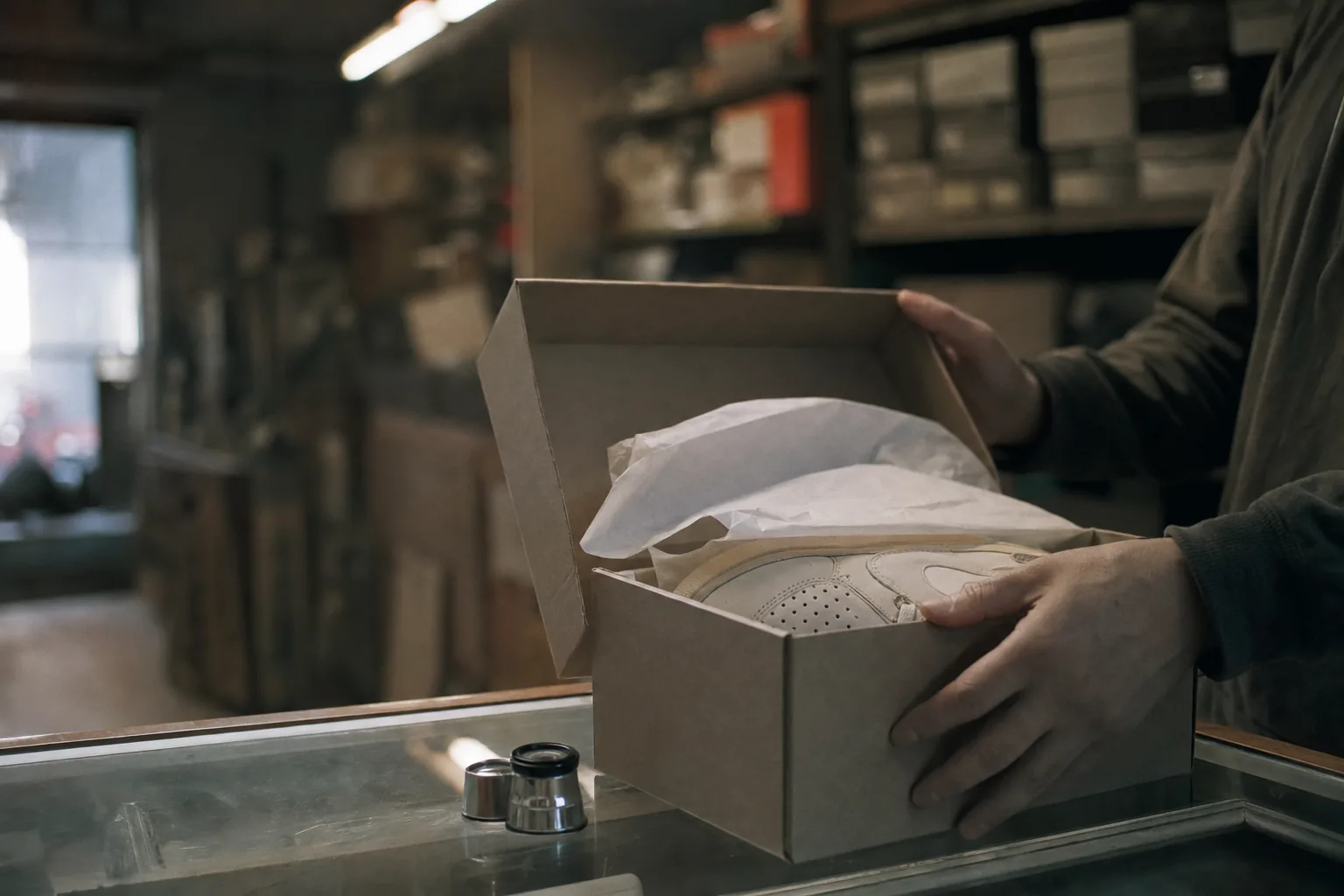
The Nike Dunk Low CO.JP "City Attack" (style code DV0833-601) originally released in 1999 exclusively through Nike's Japanese retail partners. For twenty-five years, the original pairs circulated only inside Japan — on domestic auction floors, in Harajuku resale shops, and eventually on Japan's authenticated sneaker platforms. When Nike issued a global reissue on July 5, 2024, that reissue landed on StockX. The 1999 originals did not. That gap — between what Japan held and what the West ever saw — is precisely what SNKRDUNK's catalogue maps.
If you've already found a specific pair on SNKRDUNK and want it sourced and shipped, FindLuxuryJapan's Tokyo team can locate, evaluate, and deliver it to you — describe what you're after and we'll send matched options within two business days.
What is SNKRDUNK and why don't Western buyers see its inventory?
SNKRDUNK is Japan's largest C2C sneaker marketplace, launched in 2018, connecting individual sellers, local boutiques, and collectors under a strict authenticity verification system. Despite growing international reach, the inventory is overwhelmingly Japan-sourced: sellers are Japanese collectors, shops, and estates liquidating pairs that were never exported.
The structural reason Western buyers miss it is distribution, not discovery. The platform's seller base is domestic, which means listings stay invisible to anyone who isn't already operating inside Japan's resale ecosystem. StockX and GOAT aggregate supply from US and European sellers — and Japanese domestic exclusives simply don't reach those seller pools in meaningful volume. The result is two parallel markets with almost no inventory overlap on the categories that matter most.
Which Nike colourways appear on SNKRDUNK but never hit StockX or GOAT?
The CO.JP line is the clearest answer. The CO.JP program, short for "Concept Japan," originally ran in the late 1990s and early 2000s with Japan-exclusive colorways on Air Force 1 Lows and Dunk Lows, deviating from standard sports themes and helping to inspire Nike SB. Those original pairs — the ones that actually sold through Japanese retailers at the time — are what surfaces on SNKRDUNK. The global reissue of the "City Attack" (DV0833-601) went wide in 2024; the 1999 originals never did.
More recent Japan exclusives follow the same pattern. Nike released a Japan-exclusive "Tokyo" City Edition Dunk Low (style code IB2259-001) on April 29, 2025, inspired by the SB Dunk from 2004. That shoe was exclusive to Japan. It does not appear on StockX or GOAT because the supply never left the country. Pairs that didn't sell at retail or were bought and held by Japanese collectors end up listed on SNKRDUNK, authenticated, and sitting there for whoever can reach the platform.
The broader CO.JP archive is deep — dozens of SKUs across multiple seasons that were never part of any global launch. Those pairs exist in Japan's collector ecosystem and move through domestic authenticated resale rather than through Western channels. For a full picture of what Nike has kept Japan-only across the Dunk and Air Force 1 lineups, the Nike CO.JP Japan-exclusive program covers the catalogue in detail.
What Japan-only New Balance collabs sit in SNKRDUNK's catalogue?
The New Balance 1300JP is the anchor. New Balance re-released the MADE in USA 1300 exclusively for Japan in 1995, and since then the 1300JP has adhered to a tradition of limited releases every five years, each drop eagerly anticipated by enthusiasts worldwide. Most of those releases, across most of those five-year cycles, were Japan-only at launch — which means unsold retail stock and collector pairs from earlier editions accumulate inside Japan and eventually reach SNKRDUNK.
The collaborations built on that base are more exclusive still. A late-2025 Sashiko Gals x New Balance 1300JP was priced at ¥363,000 JPY and available exclusively at New Balance Harajuku, with only two pairs released through a charity-based lottery. A pair like that — two units, Japan-only raffle — has no pathway to StockX. If it surfaces anywhere after the initial sale, it will be on a Japanese domestic platform.
Vintage editions of the 1300JP "Steel Blue" colorway, held by Japanese collectors for decades, are the kind of inventory that SNKRDUNK's deadstock requirements pull into authenticated circulation. These pairs represent a category of product that Western resale platforms have no seller base for, because the supply was never exported. The broader picture of what Japan keeps domestically across sneakers and other categories is covered in the guide to Japan-only sneaker releases you can't buy in the US.
Which Asics regional exclusives show up on SNKRDUNK?
The mita sneakers partnership with Asics produces the most consistent stream of Japan-exclusive Gel-Lyte releases. The ASICS GEL-LYTE 3 OG "TRICO 2024" (SKU: 1203A579.100, MSRP ¥19,800 JPY) was created by Hideyuki Kunii, the creative director of mita sneakers, as the first release of the GEL-LYTE III's 35th-anniversary celebration project. Starting July 27, 2024, it was available through mita sneakers and directly managed ASICS stores in Japan, with remaining stock hitting both brand online stores from July 29 onwards. That's a Japan-only retail window, and pairs that didn't sell through at retail move to domestic authenticated resale.
The pattern continues with further mita x ASICS GEL-Lyte drops following staggered Japan-only release cadences — a draw, an in-store release, then remaining stock on the webstore. These Japan-only drops create a steady flow of pairs into the domestic resale market that Western buyers can't reach through their usual channels because the releases never touched a US or EU retailer.
Japan's domestic sneaker boutique scene — including the mita collaborations — is mapped in the broader guide to Tokyo exclusives that never leave Japan, which covers the boutique-to-resale pipeline in detail.
What domestic streetwear brand collabs does SNKRDUNK carry that the West ignores?
The streetwear layer on SNKRDUNK is where the gap becomes structural rather than incidental. Japan's domestic streetwear labels — brands built around limited domestic distribution, Japanese-language marketing, and physical retail in Harajuku and Shibuya — produce collaborations that are never pitched to Western wholesale buyers or international press. The result is a category of product that Western resale platforms have no seller base for.
SNKRDUNK's catalogue explicitly lists Atmos and Maison Mihara Yasuhiro among its top brands alongside Nike, Air Jordan, New Balance 1300JP, and Asics. Atmos, in particular, runs Japan-exclusive colorways designed for the domestic market and distributed through its own stores. When those pairs sell out at retail, they move to SNKRDUNK rather than to StockX, because the seller pool is Japanese.
Supreme Japan-exclusive drops follow the same logic. Supreme operates Japanese stores with drops that differ from the US and EU calendar, and those Japan-specific pieces — including footwear collaborations — circulate through SNKRDUNK's streetwear category. Comme des Garçons Play and CDG Homme Plus produce Japan-market footwear and apparel that rarely reaches Western secondary markets in volume, and SNKRDUNK is where that inventory surfaces when it moves.
Why does deadstock from the 1990s and 2000s surface on SNKRDUNK and nowhere else?
Japan's collector culture and its approach to storage are the short answer. Japanese sneaker buyers from the 1990s and early 2000s bought pairs they intended to keep — and kept them properly, in original boxes, in climate-controlled spaces. When those collections eventually reach the resale market, they arrive in condition that Western buyers find remarkable. The longer explanation for why used Japanese sneakers look nearly new is worth reading separately at why used sneakers from Japan look nearly new.
SNKRDUNK's deadstock policy tightens the quality floor further. All products bought and sold on SNKRDUNK must be "deadstock" — universally understood by sneakerheads to describe items that are brand new, unworn, and in their original packaging. That requirement means the vintage pairs that surface on SNKRDUNK have been stored untouched since purchase — often for two or three decades. A Japan-exclusive CO.JP Dunk Low from 2001, still in its original box, authenticated and listed on SNKRDUNK, has no equivalent listing on any Western platform because the supply never left Japan.
Japan's retail culture through the 1990s and 2000s produced enormous quantities of sneakers that were purchased, stored, and never worn — partly because Japanese consumers bought in multiples to preserve one pair, and partly because Japan received exclusive colorways that generated collector demand domestically without any export pressure.
How does SNKRDUNK's authentication differ from what Western buyers are used to?
The technology stack is the main difference. As detailed on SNKRDUNK's own authentication documentation, in addition to visual inspection, the platform utilizes cutting-edge specialized equipment not found elsewhere in Japan, including X-ray transmission devices, digital microscopes typically used by specialized institutions, and infrared cameras. These tools scientifically detect subtle font differences in inner tags, adhesive reactions not found in authentic products, and internal structural differences invisible to the naked eye.
The process is also tiered by risk. SNKRDUNK has set five levels of authenticity for each sneaker model, with the number of fakes in circulation heavily influencing this ranking. Level 5 includes models like collaboration sneakers with Travis Scott or any shoe with a high resale value and a history of being counterfeited. That means a Japan-exclusive collaboration piece — already rare, already high-value — receives the most intensive inspection before it ships.
Through these rigorous processes, SNKRDUNK achieves an authentication accuracy of 99.96%. The team builds a database that covers the specific variations found in Japan-market SKUs — variations that Western authentication services may not have reference material for at all.
| Platform | Authentication method | Japan-exclusive inventory | International shipping |
|---|---|---|---|
| SNKRDUNK | X-ray, infrared, microscope + expert team | Core of the catalogue | No direct; concierge required |
| StockX | Expert visual inspection | Minimal — US/EU seller base | Yes |
| GOAT | Expert visual inspection | Minimal — US/EU seller base | Yes |
Why does SNKRDUNK inventory stay inside Japan even when demand exists abroad?
Three structural factors keep the inventory local. First, Japanese sellers default to domestic platforms because the fees, the language, and the logistics are all calibrated for Japan. Listing on StockX requires English, US bank accounts, and familiarity with international shipping compliance — none of which are standard for the average Japanese collector. Second, the platform has no direct international shipping, so even buyers who find the listing cannot complete the purchase without a local intermediary. Third, the platform's seller base is overwhelmingly domestic, meaning the supply never reaches Western aggregators in the first place.
The result is a market that is visible but unreachable for most international buyers. The pairs are listed, photographed, priced, and authenticated — they're just on the wrong side of a logistics and language barrier that most Western buyers don't have the infrastructure to cross. That barrier is structural, not accidental, and it's why the inventory gap between SNKRDUNK and StockX has persisted even as global sneaker culture has become more connected. For a broader look at why Japanese sellers don't engage with international buyers directly, the piece on why Japanese sellers refuse international buyers covers the mechanics in full.
FindLuxuryJapan sources directly from Japan's domestic platforms, including authenticated resale listings, with a 10% sourcing fee on the item price (minimum ¥5,000) and no charge if we can't fulfill the request.