· 10 min read
Converse Japan: Why It's a Genuinely Different Shoe
The Canvas All Star J is built to a different specification than anything Converse sells in the US — here's a material-by-material breakdown of what that actually means.
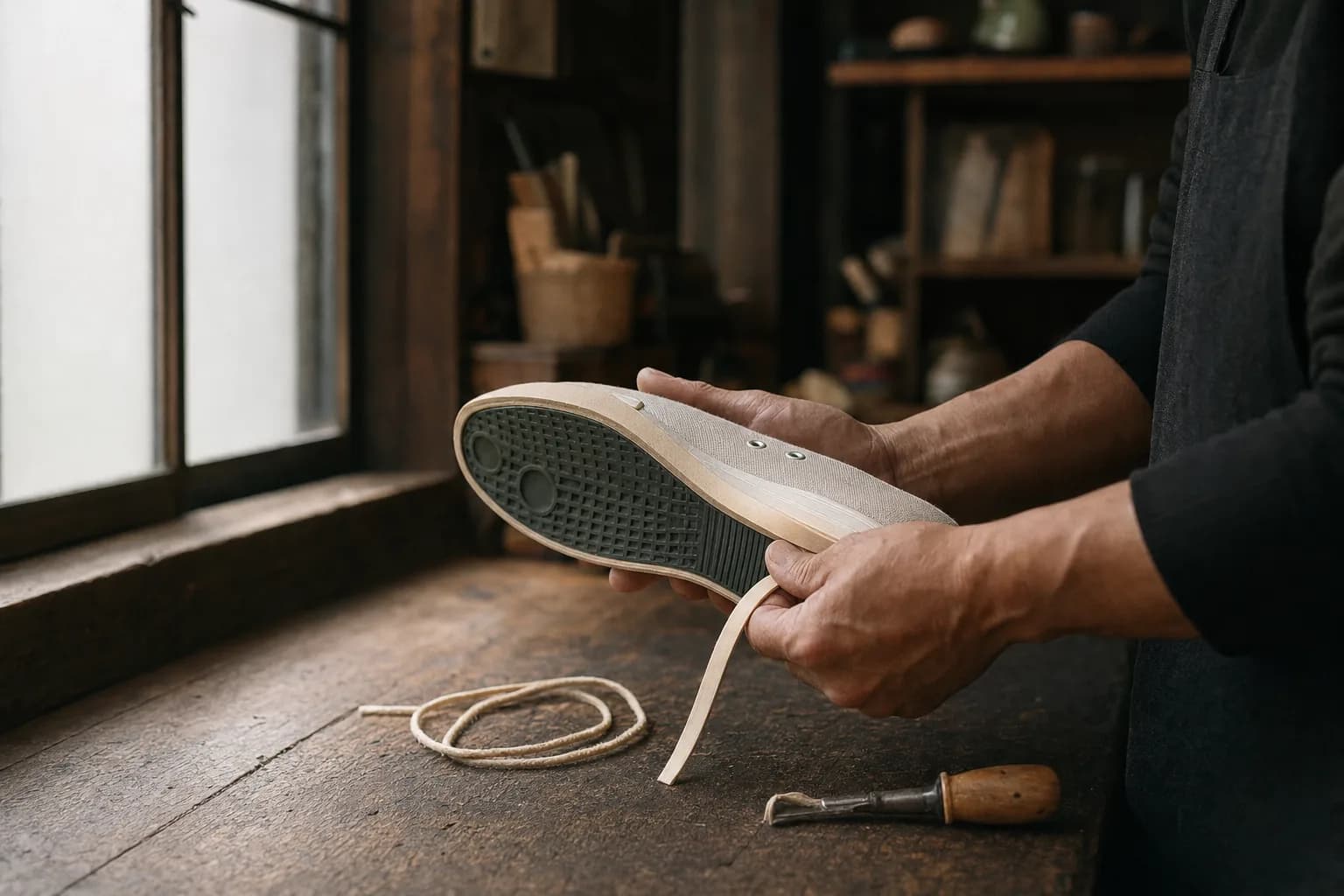
What does 'Made in Japan' actually mean on a Converse box?
It means the shoe was produced by a different company operating under a separate licence. Converse Japan is a separate entity from the global Nike-owned brand, run within the ITOCHU Corporation — one of Japan's largest trading conglomerates. Nike's own SEC filings state plainly that "we do not own the Converse trademarks in Japan", which means the Japanese operation sets its own production standards without reference to what Converse does in the US, Vietnam, or Indonesia.
The practical result is a shoe that has diverged significantly from the global line — not in silhouette, but in the materials and construction decisions made at every stage of production. The All Star J (the "J" denoting Japan) is not a limited colourway or a collector's reissue. It is the everyday retail Chuck Taylor as Converse Japan builds it, sold at Japanese retail prices that reflect the cost of making it properly.
How is the canvas different from a standard Chuck Taylor?
The upper is 100% cotton canvas with a fine weave and a distinctive sheen — and it molds to the foot the more it is worn. The stitching is finished by hand by skilled artisans, and the shoelaces are cotton, measuring 8mm wide. On the standard global All Star, the laces are synthetic and the tape binding the upper edges is also synthetic — on the Japanese model, that tape is unbleached and natural-coloured, which gives the shoe a visibly cleaner, more considered finish even before it leaves the box.
The standard All Star uses lighter canvas with minimal reinforcement. That lighter canvas is cheaper to produce at volume and easier to source globally; it is also the reason a worn-out global Chuck Taylor often shows fraying and distortion at stress points within a year of regular wear, where the Japanese version holds its shape considerably longer.
The insole tells a similar story. Converse Japan uses a rubber sponge insole with superior cushioning and rebound compared to the standard model — a detail that matters more than it sounds, because the original Chuck Taylor's reputation for being uncomfortable to stand in all day comes almost entirely from its flat, unpadded footbed.
What changed in the vulcanisation process — and why does it matter?
Both the global All Star and the Japanese version use vulcanised construction — the process in which the rubber sole and canvas upper are bonded inside a heated oven rather than simply glued. In the vulcanised shoemaking process, the soft rubber sole parts are attached to the shoe upper before the rubber is heat-cured, and the entire shoe is then heated to around 170°C. The result is a bond that fuses materials together rather than relying on adhesive that weakens over time.
Where the Japanese version differs is in the quality of the rubber compound and the care taken in the assembly stage before the shoe enters the oven. The foxing tape — the strip of rubber that wraps the lower edge of the upper and bonds it to the sole — is applied more precisely on the Japanese model, producing a cleaner join and a more consistent sidewall profile. The toe cap is also noticeably different: the size of the toe cap and the use of cotton shoelaces give the Japanese-made model a cleaner impression compared to the standard version placed side by side. The rubber used for the sole and sidewalls is denser, which affects both the feel underfoot and how the shoe ages — a denser compound yellows more slowly and resists compression.
Japan has its own deep tradition of vulcanised footwear production, particularly in Kurume, Fukuoka, where the rubber sole and upper are bonded inside a large kiln under heat and pressure, triggering a chemical reaction that fuses them permanently, producing a sole so flexible it curves with the foot. That tradition — and the workforce trained in it — is part of what the Japanese production environment brings to a shoe like the All Star J.
Is the sole construction really different, or just marketing?
It is genuinely different, and the most telling evidence is the interior lining. In mid-2022, Converse — long owned by Nike — made drastic changes to their core Chucks: instead of the all-canvas inner liner, a spongy foam liner is now being used. The Japanese version has not followed this change. The Canvas All Star J retains an all-canvas interior lining, which is how the shoe was originally built. The foam liner used in the current US and global production is cheaper, easier to cut, and faster to assemble — it is also what you feel when the shoe starts to break down, because foam compresses and holds moisture differently from canvas.
The table below summarises the construction differences between the Canvas All Star J and the current standard global All Star:
| Feature | Canvas All Star J (Japan) | Standard All Star (Global) |
|---|---|---|
| Upper canvas | 100% cotton, fine weave, hand-stitched details | Mixed canvas, machine-stitched |
| Interior lining | All-canvas | Spongy foam (changed mid-2022) |
| Shoelaces | Cotton, 8mm wide | Synthetic |
| Binding tape | Unbleached, natural-coloured | Synthetic, bleached |
| Insole | Rubber sponge with cushioning and rebound | Flat, minimal cushioning |
| Toe cap | Larger, cleaner profile | Standard profile |
| Heel label | "Made in Japan" stamp | Standard Converse patch |
| Retail price (Japan, SS2025) | ¥15,950–¥16,500 | ¥6,490 |
The price gap — roughly 2.5 times the cost of the standard model at Japanese retail — reflects real material and labour differences, not brand positioning. The Canvas All Star J OX retails at ¥15,950 in Japan as of SS2025, while the standard All Star OX sits at ¥6,490 in the same market.
How does the fit and break-in compare to the US version?
The Japanese version runs narrower and more structured, particularly around the toe box. The denser cotton canvas holds its shape from the first wear rather than immediately collapsing to the foot the way the lighter global canvas does. This means the break-in period is longer — typically two to three weeks of regular wear before the shoe softens and conforms — but the result is a silhouette that stays truer to the original Chuck Taylor shape over the life of the shoe.
Sizing is also expressed differently. Japanese Converse uses centimetre-based sizing as the primary reference, with US sizes listed alongside. A buyer used to US sizing should size up half a size from their usual US Chuck Taylor size to account for the narrower last and the firmer initial fit. The improved insole cushioning means the shoe is noticeably more comfortable from day one than the standard model, even before the canvas has softened — which partially offsets the firmer upper feel during break-in.
For anyone who has worn a pair of used sneakers from Japan and noticed they hold their shape in a way that comparable Western-market pairs do not, the explanation is usually the same: Japanese-market sneakers are built to a tighter specification and stored with more care, and the Canvas All Star J is a clear example of both factors working together.
Why did Converse Japan keep the old spec when the US line moved on?
Unlike its global counterpart, Converse Japan operates with creative autonomy — and that autonomy extends to production standards. ITOCHU, which controls the Japanese licence, has a deep background in textiles: the conglomerate also manages brands including Edwin denim and holds import and distribution rights for a number of premium fashion labels. That textile heritage shapes how Converse Japan approaches fabric selection and construction quality.
The US line's move toward foam liners and lighter canvas in 2022 was a cost and volume decision driven by Nike's global supply chain priorities. Converse Japan had no obligation to follow it, and did not. The Japanese market also supports a higher price point for quality goods — consumers there are willing to pay ¥16,500 for a canvas sneaker if the construction justifies it, in a way that the mass-market US consumer base does not. That market dynamic is what keeps the old spec alive.
The result is that the Canvas All Star J now preserves a construction standard that the shoe's own parent brand has abandoned. It is, in a specific and verifiable sense, closer to what a Chuck Taylor was in the 1980s and 1990s than anything currently produced under the global Converse line.
This pattern — a Japanese licensee maintaining heritage standards that the originating brand has moved away from — is not unique to Converse. It appears across categories, from denim to watchmaking to leather goods, and it is one of the reasons that Japan-only releases often represent a genuinely different product rather than a regional colourway distinction.
What condition do these shoes arrive in on the Japanese resale market?
New-with-box pairs are common. The Japanese domestic market produces a significant volume of deadstock Canvas All Star J pairs — shoes purchased, stored correctly, and later sold through resale channels with original packaging intact. Because the shoe is a year-round staple rather than a hype release, it does not attract the same speculative buying pressure as limited collaborations, which means resale prices stay closer to retail for standard colourways.
Pre-owned pairs tend to show wear patterns that reflect the shoe's construction quality: the canvas holds colour well, the foxing tape stays bonded, and the toe cap retains its shape rather than creasing or collapsing. Japanese sellers grade condition carefully, and a pair listed as "used, good condition" in the Japanese grading system typically corresponds to what a Western buyer would consider very good to near-mint. Understanding how Japan's pre-owned grading vocabulary works is worth doing before buying from any Japanese resale source, because the standards are stricter and more consistent than most Western equivalents.
For rarer colourways and collaboration pairs — the Canvas All Star J has been produced in limited runs with Japanese artists, regional retailers, and cultural institutions — pre-owned is often the only route. These pairs command a premium, but condition is typically high because Japanese collectors store footwear properly and rarely wear limited pairs into the ground.
How do I know I'm looking at a genuine Made in Japan pair?
Several physical markers distinguish the Canvas All Star J from the standard global model. The most direct is the heel label: the heel patch label on the Japanese-made model includes the words "Made in Japan", printed at the bottom of the patch rather than on a separate tag. On fakes or on standard pairs misrepresented as Japanese-market, this stamp is typically absent or printed incorrectly.
The insole carries a second marker: the Converse logo is printed in red on a white canvas background, a design choice inspired by the Japanese flag. This detail is consistent across the Canvas All Star J line and is absent from the standard global insole. The binding tape is a third indicator — unbleached and natural-coloured on the Japanese model, versus the bright white or black synthetic tape used on the standard version. Finally, the box itself is different: the Canvas All Star J ships in an original carton box with Japanese-market specifications rather than the standard Converse retail box.
For buyers sourcing through Japan's domestic resale market, the combination of these markers — heel stamp, red insole logo, unbleached tape, original box — provides a reliable authentication checklist. The same careful approach applies to other Japanese-market goods where provenance matters: the principles behind authenticating Japanese second-hand purchases translate directly to sneakers, even if the vocabulary differs.