· 10 min read
Proxy vs Concierge: Which One Actually Works
Proxy services solve a logistics problem. Japanese luxury sourcing is a trust and authentication problem, and the two are not the same.
The proxy model was designed to solve one problem: you are outside Japan, the seller is inside Japan, and there is no direct route between the two. A proxy provides a Japanese address, handles the domestic payment, and forwards the package. For a ¥3,000 figure or a ¥8,000 streetwear piece, that is usually enough. For a ¥400,000 pre-owned Hermès Kelly, a Japan-only Grand Seiko reference, or an authenticated Chanel bag from a Ginza consignment specialist, it is structurally inadequate — and the gap shows up before the item ever ships.
Why do standard buying services struggle with high-value Japanese items?
The architecture of a standard buying service is transactional: submit a link, fund the purchase, receive the package. That pipeline works when the item is straightforward, the seller is indifferent to who buys, and condition is not a meaningful variable. None of those conditions hold for high-value pre-owned luxury in Japan.
Japan's pre-owned luxury market runs on a grading and authentication infrastructure that requires physical inspection to interpret correctly. Japan's pre-owned grading system uses a standardized S/A/AB/B/C scale that is consistent across major resale channels — but the difference between an A-rank and an AB-rank on a ¥300,000 bag is not visible in a listing photograph. Proxy services do not authenticate items and their inspection plans are designed to catch major, obvious discrepancies — not the minor flaws, hardware wear, or condition nuances that determine whether a luxury piece is correctly priced.
The buying service's job, structurally, is to purchase what you tell it to purchase. That mandate makes it the wrong tool the moment item evaluation becomes part of the job.
What happens when a seller refuses a buying service mid-transaction?
Seller refusal is a documented, recurring failure mode — not an edge case. Some sellers will cancel orders if they know a proxy is ordering for someone, so sometimes even large proxy services are not an option. The refusal often happens after funds have been submitted and the bid has been placed, leaving the buyer in a holding pattern while a refund processes.
For luxury goods specifically, the seller-refusal problem is more acute. Private sellers on Japan's domestic platforms who list high-value items often do so with the expectation of a domestic buyer — someone who understands the grading notation, can ask questions in Japanese, and will not initiate a dispute over a condition detail that was disclosed in the listing. A buying-service account, identifiable by its warehouse address or known service name, triggers the same reluctance that any foreign buyer would. The structural reasons Japanese sellers refuse international buyers apply with equal force to buying-service accounts, because from the seller's perspective, the practical risks are identical.
When refusal happens mid-transaction, the buyer has no item and no timeline for recovery. The buying service cannot compel a seller to complete the sale. It can only request a refund from the platform — a process that takes time and returns you to the start of the search, not to the item.
Why can't a buying service verify condition before you pay?
A buying service's inspection, where it exists at all, happens after the item arrives at the warehouse — which means after the seller has already been paid and the transaction is complete. Their inspection plans are designed to catch major, obvious discrepancies (like receiving a t-shirt instead of a book), but they won't cover minor flaws, functional issues with electronics, or anything requiring them to open sealed packaging.
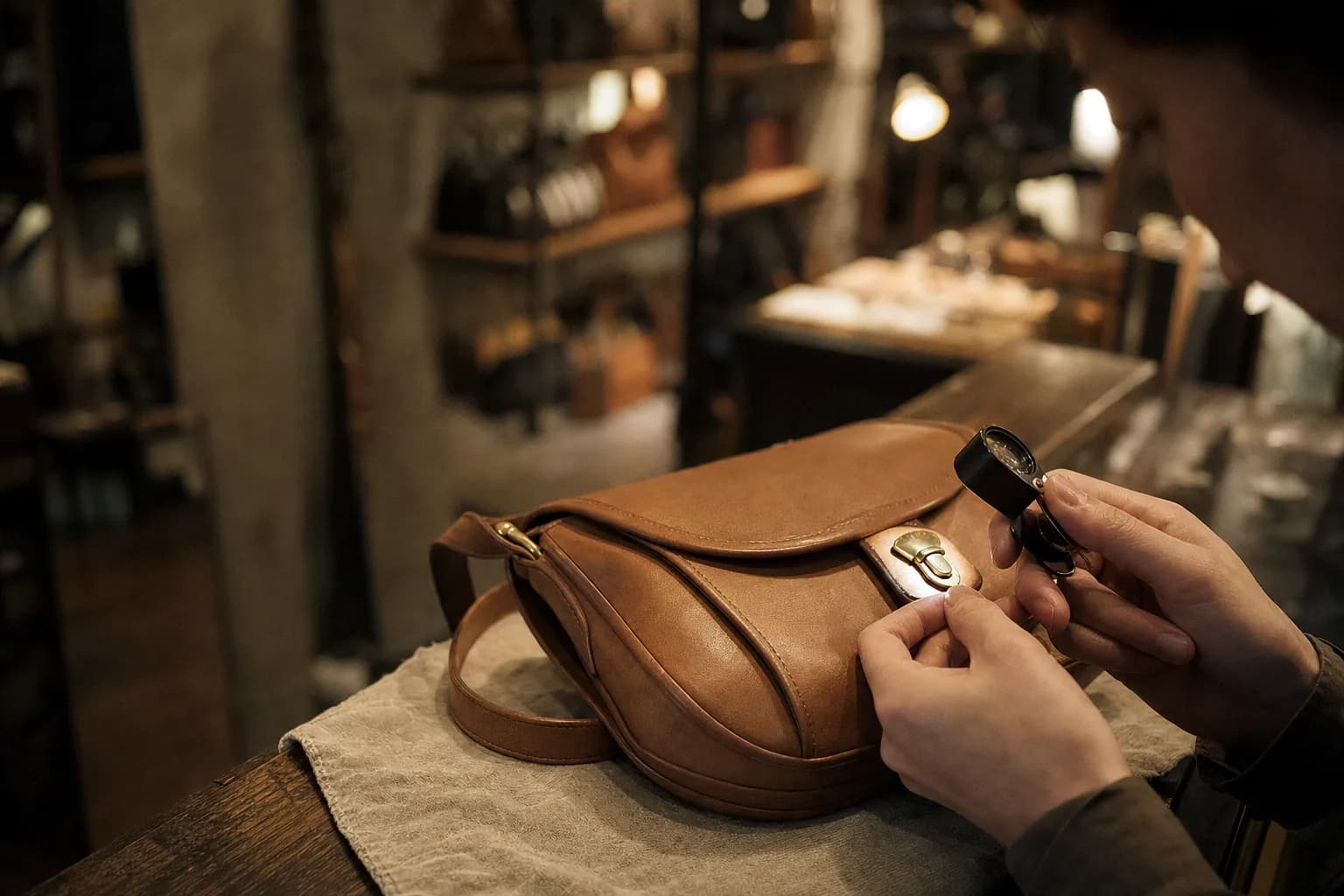
For a commodity purchase, this sequencing is acceptable. For a ¥500,000 pre-owned watch or a B-rank Birkin, it is not. The entire value of Japan's pre-owned luxury market to an international buyer depends on condition being accurately stated and independently verified before money changes hands. Japanese resale professionals use magnifying equipment to identify flaws invisible to the naked eye — a pinhead-sized mark that would not be mentioned in a Western listing can drop an item from A to B grade in Japan's system. A warehouse worker running a basic arrival check is not performing that evaluation.
The deeper problem is that even requesting enhanced inspection photos creates a timing constraint. On domestic platforms, the window to report a problem closes three days after arrival at the warehouse, not when the item reaches you internationally. By the time a misrepresented item crosses the ocean, your ability to file a claim has already expired. A buyer who paid for a Grade A piece and received a Grade AB piece has, at that point, no platform mechanism to recover the difference.
Accessing Japan's pre-owned luxury market as an international buyer means engaging with a sourcing system that rewards those who can evaluate items in person, in Japanese, against the physical object. The authentication process for pre-owned luxury in Japan involves specific grading scales, police-issued dealer licenses, and brand-specialist appraisers — none of which a warehouse inspection replicates.
If you have found a specific pre-owned piece in Japan and want it evaluated and sourced without the condition-verification gap, a concierge request is how that works.What does 'no recourse' actually mean when a luxury item arrives wrong?
When a buying-service purchase arrives in a condition that does not match the listing, the buyer's practical options are narrow. The service cannot force a refund from the seller — proxy services cannot simply force a refund or pull money back from a seller. The proxy can only request a refund from the seller on the platform. It is entirely up to the seller to accept the return. If the seller says no then you are out of luck.
A chargeback through the buyer's card issuer is the remaining option, but it carries its own constraints. A condition dispute — where the item arrived but not as described — is harder to win than a non-delivery claim. The buyer must demonstrate that the item materially differed from what was represented, which requires documentation that a warehouse inspection rarely produces. And filing a dispute with your payment provider could get your proxy account banned, which eliminates the access channel entirely.
For high-value items, the asymmetry is severe. The buying service collected its fee regardless of outcome. The seller has been paid. The platform's dispute window may have closed. The buyer is left holding an item that is not what they paid for, with no party in the chain who is contractually obligated to make it right.
Why do authentication disputes fall through the cracks with buying platforms?
Proxy services do not authenticate items. If you buy a luxury watch or a branded item and it turns out to be a counterfeit, the proxy will not help you. This is not a policy failure — it is a structural one. Authentication requires expertise, physical access to the item before purchase, and accountability for the conclusion. A buying service's operational model provides none of those things at the point they matter.
The counterfeit risk in Japan's pre-owned market is concentrated in specific channels: C2C online platforms, informal flea markets, and unlicensed resellers. These are also, not coincidentally, the channels most accessible to standard buying services. Licensed brick-and-mortar chains with in-house authentication and police-issued dealer permits are harder to access via a buying service because they require direct engagement, relationship, or licensing that a standard account does not carry.
The brands most targeted by counterfeiters globally — Louis Vuitton Monogram Canvas, Chanel Classic Flaps, Hermès Birkin and Kelly — carry the highest counterfeit risk in any market, including Japan's C2C channels. Superfakes for these pieces now use the same materials and construction techniques as authentic production, making visual inspection insufficient for the most sophisticated fakes. A warehouse arrival photo, the only authentication a buying service can realistically offer, does not resolve this.
When a counterfeit arrives and the buying service declines to intervene, the buyer is in the same position as a condition dispute: a chargeback attempt against a completed transaction, with a closed dispute window and a seller who has already been paid. The deeper problem — that the item was never evaluated before purchase — cannot be corrected after the fact. For more on what that evaluation actually involves, the inspection checklist Japan's specialists use for watches illustrates how far a professional pre-purchase review goes beyond a warehouse photo.
Why does the luxury grey market make remote buying especially risky?
Japan's pre-owned luxury market moves over ¥300 billion annually, and a meaningful portion of that inventory circulates through channels that are structurally inaccessible to remote buying services. The kaitori system — professional buying services that purchase pre-owned luxury directly from consumers — feeds inventory into licensed dealer auctions where only merchants with an authorized antique dealer's license can participate. The rarest pieces surface here first: Japan-only Hermès special orders, limited Grand Seiko references, vintage Chanel runway pieces acquired from their original Japanese owners.
Standard buying services cannot access this tier. The pieces that do reach C2C platforms — the channels a buying service can access — are typically the overflow from that licensed network, not its best inventory.
This creates a selection effect that is invisible to most buyers using these services. The item you find on a domestic consumer platform and send a buying service to purchase is, by definition, an item that did not sell through Japan's licensed dealer network. That may mean nothing. It may mean the item has a condition or provenance issue that caused licensed buyers to pass. A buying service has no way to determine which.
The grey market layer adds a second risk. Items described as sourced from Japan but sold through informal channels outside the licensed resale system carry the geographic credibility of Japan's reputation without the institutional protections that create it. The phrase "preloved from Japan" has become a tool that exploits consumer assumptions about Japan's reputation for authenticity — and buyers purchasing remotely from listings they cannot fully evaluate are among the most exposed to this.
What does a concierge service do that a buying service cannot?
The difference is not one of degree — it is one of model. A buying service executes a transaction. A japan luxury concierge service evaluates an item before committing to the purchase, operates within Japan's licensed sourcing network, and carries accountability for what it delivers.
The table below maps the structural gap across the points where buying-service tools fail for luxury sourcing.
| Friction point | Standard buying service | Concierge sourcing |
|---|---|---|
| Seller refusal | Transaction cancelled; refund pending | Sourcing team engages directly; seller relationship managed |
| Condition verification | Post-purchase warehouse check; surface-level only | Pre-purchase evaluation against grading standards |
| Authentication | Not offered; buyer assumes risk | Authenticity and pricing models applied before approval |
| Licensed auction access | Not possible; license required | Accessed via licensed partner network |
| Recourse if item is wrong | Platform dispute; outcome seller-dependent | Item approved by buyer before purchase; accountability stays with sourcing team |
| Grading dispute | No expertise; no leverage | Evaluation against Japanese grading standards before purchase |
FindLuxuryJapan operates as a concierge sourcing service. When a buyer submits a request — a description, a reference number, or a link to a listing they have already found — the Tokyo-based team locates the item, evaluates it using pricing, condition, and authenticity models, and presents matched options for approval before anything is purchased. The buyer approves before money moves. Items that do not meet the sourcing team's conditions do not reach the buyer.
The sourcing fee is 10% of the item price, with a minimum of ¥5,000, quoted before approval and fixed after. Requests that cannot be fulfilled cost nothing. That structure — fee contingent on a completed sourcing job that the buyer has approved — is the operational opposite of a buying service, which collects its fee on execution regardless of whether the item is what the buyer expected.
The problem a standard buying service solves — getting a domestic Japanese transaction to an overseas buyer — is real. But for pre-owned luxury goods where condition, authentication, and seller trust are the actual variables, solving only the logistics problem leaves the harder problem untouched. That is the gap this article describes, and it is a model-level gap, not a platform-quality gap. A better buying service is still a buying service.