· 10 min read
Nike CO.JP: Japan's Exclusive Online Store
Nike CO.JP is not a sub-brand or a marketing label — it's a distinct Japan-market digital storefront that stocks colourways and drops that will never appear on Nike.com.
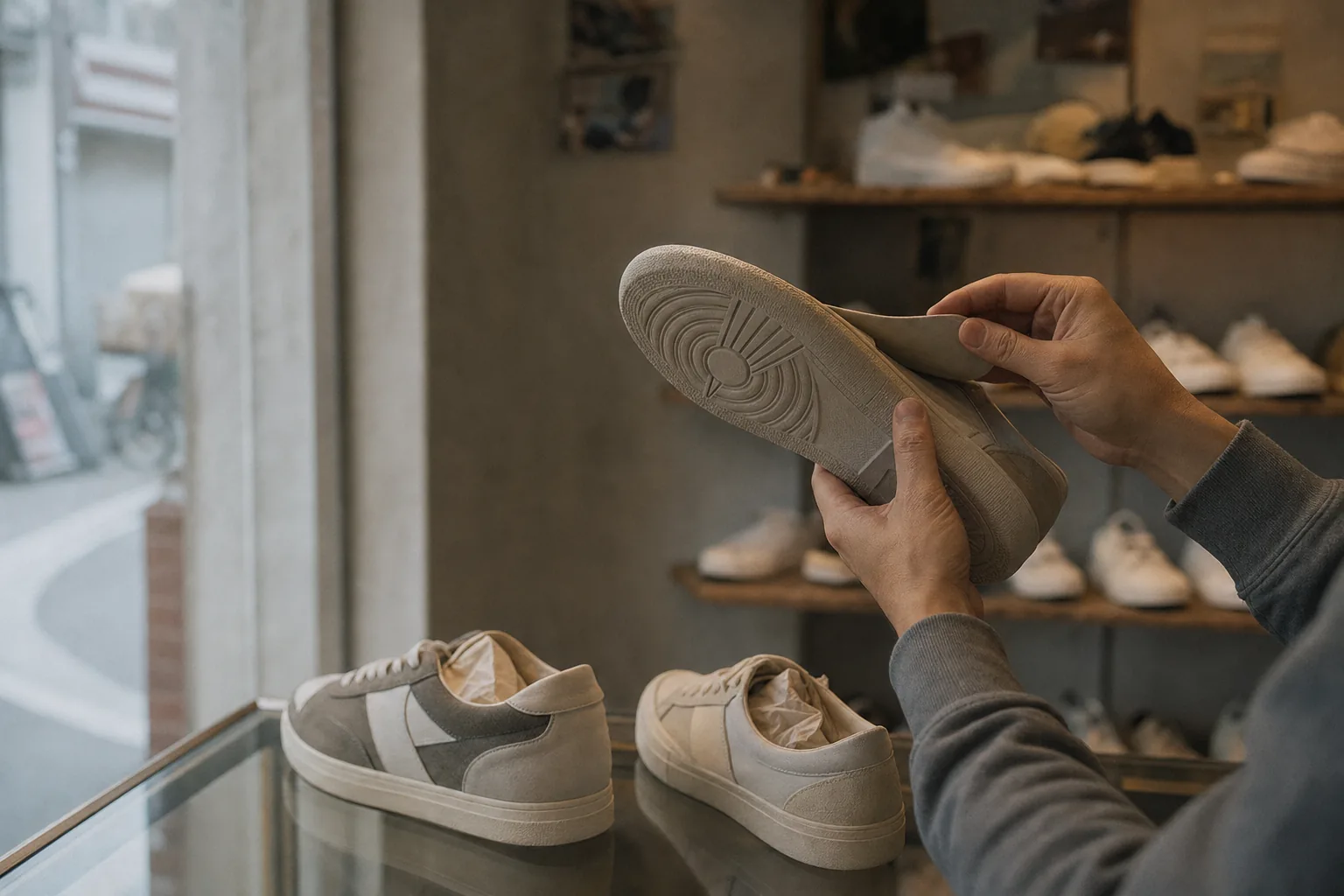
The Dunk Low CO.JP "What The" (IB2051-400) spent seven years as a Japan-only object before Nike finally gave it a global reissue in late 2024. For those seven years, the only way to own it at retail was to be in Japan — or to know someone who was. That gap between what Nike lists on nike.com/jp and what it lists everywhere else is exactly what CO.JP is about.
If you're sourcing Nike CO.JP releases and need a Tokyo team to locate and evaluate a specific pair, FindLuxuryJapan sources individually from Japan's domestic market — describe what you want and we'll match it within two business days.
What exactly is Nike CO.JP and how is it different from Nike.com?
CO.JP stands for "Concept Japan." Nike established the CO.JP imprint in the early 2000s to release sneakers available exclusively in Japan, and the designation has carried forward ever since as a marker for Japan-domestic product. The name itself mirrors Japan's country-code internet domain structure — .co.jp is the suffix for companies incorporated in Japan — and Nike's use of it signals exactly that geographic intent.
Nike.com is a global platform with regional versions that share the same core catalogue. Nike.co.jp — the Japan storefront — carries that shared catalogue plus a layer of product that exists nowhere else: Japan-domestic colourways, quickstrike drops announced only through Japanese SNKRS, and collaboration releases tied to Japanese creative partners. A shopper on Nike.com in the US or EU will never see those listings, because they are not offered on the global platform. The storefront is the same Nike infrastructure; the inventory is not.
The CO.JP program was most prominent from the mid-1990s through the early 2000s, when Nike was still expanding its global reach and Japan occupied a position at the leading edge of sneaker culture. The program has been periodically revived since, with Nike reissuing classic CO.JP references and producing new Japan-specific colourways under the same designation. Each generation of CO.JP releases follows the same logic: product built for the Japanese market, listed on the Japanese storefront, not offered elsewhere at launch.
Which sneaker types does Nike CO.JP list that never appear globally?
The Dunk Low is the silhouette most associated with CO.JP, but the program has always been broader. Air Force 1s, Air Max models, and running silhouettes have all carried Japan-exclusive colourways at various points. What they share is a material and colourway sensibility that reads differently from global releases — premium leathers, tonal palettes, and Japanese cultural references that would not resonate the same way in a global drop.
The CO.JP Dunk Lows tend to use mixed premium materials where the global version uses standard leather. Nike's CO.JP series is a line tailored to the unique tastes of Japanese consumers, featuring exclusive designs and collaborations with local artists and brands. Internally, CO.JP-designated pairs carry "CO.JP" printed on the insole and tongue label — a detail that distinguishes the Japan-market version from any global colourway that might share a similar palette.
Running product also appears on the Japan storefront in colourways unavailable elsewhere. Japan-specific packs for models like the Pegasus and Vomero Plus have been distributed through Japanese retail channels in colourways that never surface on global Nike platforms. The pattern holds across categories: if it carries the CO.JP designation or is listed only through Japanese retail partners, it is not on Nike.com.
What Japan-domestic colourways has CO.JP released in the last few years?
Four releases from the past few years illustrate the range of what CO.JP produces.
| Model | SKU | Colourway | Year | Status |
|---|---|---|---|---|
| Dunk Low CO.JP "Brown Snakeskin" | FJ5434-120 | Natural/Black/Ale Brown/Pecan | 2023 | Japan-domestic at launch |
| Dunk Low CO.JP "Ultraman" (reissue) | FQ6965-600 | Varsity Red/Silver | 2024 | Wider release in 2024 |
| Dunk Low CO.JP "What The" (reissue) | IB2051-400 | Midnight Navy/Varsity Maize/Varsity Red | 2024 | Global reissue of 2017 Japan-exclusive |
| Dunk Low Tokyo City Edition | IB2259-001 | Light Bone/Muslin/Phantom/Gum Yellow | 2025 | Exclusive to Japan |
The 2023 "Brown Snakeskin" (FJ5434-120) used distressed suede overlays, a snakeskin-effect pattern across the toe boxes and quarter panels, and a croc-like leather Swoosh — a material combination that would read as overbuilt on a global release but fits precisely within what the Japanese market expects from a CO.JP drop. The latest addition to the CO.JP lineup came crafted in a mix of premium materials, much like many Japan exclusives.
The 2025 Dunk Low Tokyo City Edition (IB2259-001) takes a different approach: tonal cream and white hues across mixed materials — tumbled leather at the mudguard, suede on the eyelet, faux ostrich leather on the heel overlay — with a tassel charm and gum sole that reference the original Nike SB Dunk Low Tokyo. The Nike Dunk Low Tokyo City Edition released exclusively in Japan on April 29, 2025, through select retailers online and in-store, with a retail price of $130. It was not offered on any non-Japanese Nike platform.
Which Japanese streetwear collabs are CO.JP exclusives?
The CO.JP program has always overlapped with Japan's streetwear ecosystem. The most significant collaborations in Nike's Japan history — fragment design, sacai, Undercover — are rooted in the same Tokyo creative network that CO.JP was built to serve. Not all of those collabs are CO.JP-designated, but the distribution logic is the same: product conceived in Japan, for Japan, listed on the Japanese platform first.
Chitose Abe of sacai and Hiroshi Fujiwara of fragment design have collaborated several times both with each other and Nike, producing releases like the LDWaffle x sacai x fragment that originated in the Tokyo creative scene. Fragment design — Hiroshi Fujiwara's label — has been a recurring Nike collaborator, and many of those drops have had Japan-priority or Japan-exclusive distribution windows before any global allocation. The same applies to Undercover, which has maintained a close partnership with Nike for decades and regularly produces colourways that land on the Japanese storefront before — or instead of — appearing globally.
The broader point is structural: Nike's Japan platform functions as the primary channel for any collaboration whose creative origin is Japanese. A drop that begins in Tokyo, with a Japanese designer, for a Japanese retailer, is listed on nike.co.jp. Whether it ever reaches Nike.com depends on demand, the brand's global strategy, and the terms of the collaboration — and many never do. The Japan-only boutique drops covered in our piece on atmos Tokyo exclusives that never leave Japan illustrate how tightly some of these releases are held to the domestic market.
Why can't a US or EU shopper simply browse and buy from CO.JP?
Two separate barriers operate simultaneously. The first is geographic: Nike's Japan storefront uses IP-based geo-blocking, the standard mechanism by which Japanese web platforms restrict access from outside the country. Geo-blocking restricts access to online content based on a user's detected geographic location — when you request a website or service, the server checks your location against a set of access rules, and if you fall outside the approved regions, it limits what you can see or blocks you outright. A US IP address attempting to load certain Japan-market Nike pages will either be redirected to the global site or blocked from the product listing entirely.
The second barrier is transactional. Nike Japan's checkout requires a Japanese payment method and a Japanese shipping address. Even if a foreign shopper could browse the inventory, completing a purchase requires infrastructure that most people outside Japan do not have — a Japanese credit card or a registered Japanese address. Nike does not offer international shipping from its Japan storefront. The product stays in Japan unless someone physically in Japan, or with access to Japan-based purchasing infrastructure, completes the transaction.
This is why the Japan-exclusive sneaker market exists as a separate ecosystem rather than simply being an extension of global Nike retail. The barriers are not incidental — they are how Nike manages regional exclusivity. Our article on why Japanese sellers refuse international buyers covers the broader friction that applies across Japan's domestic retail landscape, not just Nike.
For CO.JP releases you've already identified, FindLuxuryJapan's Tokyo team can locate, evaluate, and ship them to you — describe the specific pair and we'll match options within two business days.
How does CO.JP fit into Japan's broader sneaker culture?
Japan's relationship with Nike predates the CO.JP designation. Overseas in Japan, Nike was releasing some of the most elusive and trendsetting sneakers of the era as part of its "CO.JP" or "Concept Japan" program at a time when the country's sneaker culture was already operating at a level of specificity that most Western markets had not reached. Japan had a deep Dunk community before Nike SB existed. The CO.JP program was Nike's formal recognition of that.
What makes the Japanese market structurally different is the combination of high collector density, strong condition standards, and a retail culture that treats limited product with unusual seriousness. The same conditions that make used sneakers from Japan look nearly new also mean that CO.JP pairs held in Japanese collections tend to surface in better condition than the same pairs sourced elsewhere. The secondary market for CO.JP product in Japan is large, liquid, and well-organized — which matters for buyers who missed a drop at retail.
CO.JP has also functioned as a proving ground. The CO.JP program, short for Concept Japan, served as a pioneer in building the world of sneakers as we know it today, and industry figures including Jeff Staple have described it as "the architect" of modern sneaker collecting. The creative latitude Nike gave Japanese collaborators in the late 1990s and early 2000s — unusual materials, cultural references, small runs — became the template for how limited sneaker culture operates globally. The Japan market did not follow the global playbook; it wrote an early version of it.
Which CO.JP releases have the strongest resale premium outside Japan?
The original 1999 Dunk Low "Ultraman" and "Reverse Ultraman" remain the most historically significant CO.JP pairs. 25 years ago, Nike released a series of Japan-exclusive Dunks dubbed the "City Attack" Pack — these CO.JP drops gained an IYKYK following and rose to become one of the most sought-after Asia-exclusives in Nike history. Original 1999 pairs in good condition trade at significant premiums over the 2024 reissue.
The "What The" Dunk (IB2051-400) demonstrated how the CO.JP designation amplifies resale value outside Japan. Resale prices for the "Co.Jp What The" Dunk varied significantly since 2017, selling from the $300 range all the way up to $1,500 — this was before the 2024 global reissue brought wider availability. The original 2017 Japan-exclusive commanded that premium precisely because it was inaccessible to most buyers. Once Nike reissued it globally in 2024, the premium on the original narrowed, though it did not disappear.
The Tokyo City Edition (IB2259-001) is the most recent Japan-only drop with strong resale interest outside the country. Released at ¥13,200 (approximately $130 at mid-2025 rates) in Japan, it immediately attracted international attention because it references the SB Dunk Low Tokyo — itself one of the most valuable Nike SB releases ever made — while remaining physically unavailable outside Japan. The material mix and the cultural weight of the Tokyo reference give it a resale floor that straightforward colourway releases do not have.
For buyers tracking CO.JP releases across categories, the pattern is consistent: Japan-domestic exclusivity creates a premium that persists until Nike either reissues the pair globally or the supply from Japan's secondary market catches up with international demand. The gap between those two events is where the value lives — and it's the same gap that makes Japan's broader market for exclusive product worth understanding. Our guide to Japan-only sneaker releases you can't buy in the US covers the full landscape of domestic-only drops beyond the CO.JP program specifically.