· 11 min read
Japanese Luxury Car Brands: Engineering Excellence and Heritage You Need to Know
Japan's domestic luxury car market produced nameplates, specifications, and condition standards that the export versions of the same brands never fully replicated — and understanding that gap is the real reason to pay attention to Japanese-market vehicles.
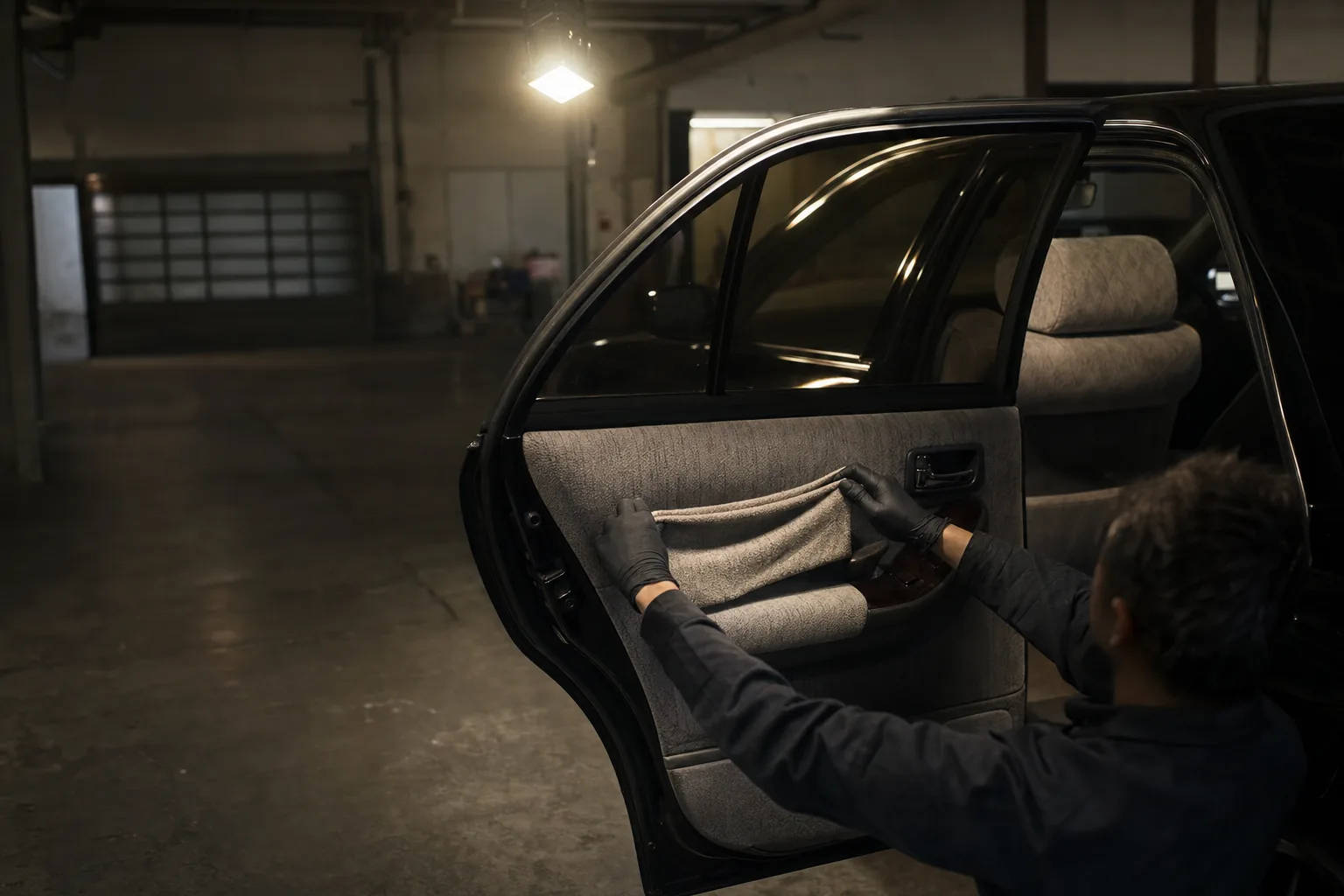
What actually makes a car brand 'Japanese luxury' — and which names qualify?
The category is narrower than it sounds. Three structures exist: dedicated luxury divisions created by Japanese automakers for export markets (Lexus, Infiniti, Acura); domestic-only flagships sold exclusively under the parent brand's own nameplate inside Japan (the Toyota Century, the Nissan President); and a handful of short-lived domestic luxury sub-brands that never made it abroad at all. Each group operates under different engineering priorities, and confusing them leads to misreading what you're actually buying.
The common thread is that all of them emerge from a manufacturing culture shaped by Japan's domestic regulatory environment. Annual taxes scaled with engine displacement pushed manufacturers to extract more power from smaller engines, accelerating advances in variable valve timing and turbocharging efficiency well ahead of what export-market engineering demanded. The shaken inspection system — Japan's rigorous biennial roadworthiness test — reinforced a maintenance culture that has no real equivalent in the US or most of Europe. These two forces, regulatory pressure and cultural expectation, produced cars that are frequently better specified and better maintained than anything wearing the same badge sold abroad.
One misconception worth correcting immediately: Lexus and Infiniti are not headquartered in the same city, and neither is where most people assume. Infiniti's headquarters is in Nishi-ku, Yokohama, while Lexus has completed its move to a new headquarters at Shimoyama, a state-of-the-art, purpose-built development in a mountainside location close to Toyota City in Japan — a relocation completed in 2024. They are distinct organizations with distinct engineering philosophies, not regional offices of the same operation.
How does Lexus engineering differ from Toyota's mainstream lineup?
The difference is real, but it starts deeper than badge or trim level. Interior materials, suspension tuning, sound insulation, powertrains, software, and features may all differ between a Lexus and a Toyota that nominally share a platform. Sharing a platform is not the same as sharing a car.
Lexus was built around the concept of omotenashi — the Japanese philosophy of anticipatory hospitality — applied to every stage of ownership rather than just the showroom. Its brand philosophy describes the customer as a guest, and that framing has engineering consequences: cabin noise targets, material tolerances, and suspension calibration are all set to a different standard than Toyota's mainstream vehicles. Where Toyota aims for practical dependability, Lexus tunes for sensory refinement.
One detail that surprises most buyers: Lexus did not exist as a brand in its home market until 2005. Every vehicle sold internationally as a Lexus between 1989 and 2005 was released in Japan under the Toyota marque with an equivalent model name — the Lexus LS 400 was the Toyota Celsior in Japan, the Lexus SC was the Toyota Soarer. This means that for its first sixteen years, Lexus engineering was embedded in Toyota-badged vehicles sold through domestic Toyota dealerships. The engineering quality was there; the separate branding was not.
The performance sub-brand Lexus F, introduced in 2007, further separated the division from Toyota's mainstream priorities. High-performance variants like the IS F sedan and the limited-production LFA supercar prioritize driving dynamics in ways that differ from Toyota's typical focus on efficiency. The LFA in particular — a carbon-fiber V10 supercar built in a dedicated facility — represents engineering that has no Toyota equivalent at any price.
What Japan-only luxury car nameplates never reached the US or EU?
Two flagships define this category: the Toyota Century and the Nissan President. Both were built for Japan's corporate and government elite, both competed against each other across decades, and neither was officially sold in North America or Western Europe under its own name.
The Toyota Century arrived in 1967, named in honor of Toyota founder Sakichi Toyoda, who would have turned 100 in that year, and was designed from the outset as a low-volume domestic flagship. Its second generation, launched in 1997, is the car that commands serious attention today. V-12 Centurys were sold over a 20-year run, from 1997 to 2017, with just fewer than 10,000 made. The 5.0-liter 1GZ-FE V12 — developed using Jaguar, Ferrari, and Mercedes-Benz V12s as benchmarks — makes the Century the only Japanese production car ever fitted with a V12 engine. Peak output is an official 276 horsepower, a figure that conveniently fits within the gentleman's agreement limit set by Japanese automakers at the time. The interior uses hand-stitched wool rather than leather — a deliberate choice reflecting the Japanese preference for understated material quality over European-style ostentation.
The Nissan President ran a parallel course. The President ran from 1965 to 2010 across four generations and sold almost exclusively in Japan as Nissan's domestic flagship against the Toyota Century. Even after Infiniti's launch in 1989, the President remained a Nissan nameplate, retaining its role as the company's domestic flagship. The closest American buyers got to the President was the Infiniti Q45 — the Q45 was based on the Nissan President platform, though with a wheelbase about two inches shorter in its first years of production.
In 2006, the Japanese Imperial Household requested and received four long-wheelbase Century Royal limousines, for a reported $500,000 each. That is the ceiling of what the domestic luxury category produced — vehicles built to a specification that no export program ever replicated.
Why do Japanese-market luxury cars often have better specs than the export versions?
The gap is structural, not accidental. Japan's domestic market is among the most demanding in the world for automotive quality. The competition in Japan is fierce because manufacturers battle for the wallets of consumers who always want the latest model with the most advanced technology, which means the Japanese market consistently receives the highest-specification versions of a given model.
Interior appointments, gauge clusters, and technology packages were frequently superior in JDM specifications compared to export models. Japan frequently received the most powerful or best-equipped version of a given model. This was not a marketing decision — it reflected what Japanese buyers demanded and what regulators required.
The Toyota Century's V12 output illustrates this in reverse: the domestic rating was 276 horsepower under the gentleman's agreement, while export versions of the second-generation Century have a higher figure listed at 295 hp. The domestic version was technically derated — but the engineering underneath was overbuilt regardless, and the interior specification, the acoustic insulation, and the chassis tuning were all calibrated for the most demanding possible customer.
The table below compares the domestic and export specifications of two key Japanese luxury models where documented differences exist:
| Model | JDM Specification | Export Equivalent | Key Difference |
|---|---|---|---|
| Toyota Century G50 (1997–2017) | 5.0L V12 1GZ-FE, wool interior, Japan only | Not officially exported to US/EU | No export version exists; all units are JDM |
| Nissan President (HG50/JG50) | VH45DE 4.5L V8, full chauffeur spec | Infiniti Q45 (shorter wheelbase, different body) | President had longer wheelbase and domestic chauffeur trim |
| Lexus LS (pre-2005 as Toyota Celsior) | Toyota Celsior, domestic trim levels | Lexus LS 400 / LS 430 for export | Domestic version sold under Toyota badge with distinct trim hierarchy |
Sourcing a specific JDM luxury variant from outside Japan requires access to Japan's auction and dealer network — a point covered in more detail below. If you're tracking down a particular spec, FindLuxuryJapan's Tokyo-based sourcing team can locate and evaluate Japanese-market vehicles individually against your stated criteria.
How does Infiniti's heritage in Japan differ from its reputation abroad?
Infiniti is almost entirely an export construction. The brand began on November 8, 1989, initially in North America — it was not sold in Japan at all for most of its history, and Japanese buyers who wanted a Nissan flagship bought the President, not an Infiniti. The brand was created specifically to compete in the US luxury market against Mercedes-Benz, BMW, and the newly launched Lexus.
Infiniti was first conceived in 1985 under the top-secret moniker of the "Horizon Task Force" — a team of Nissan engineers who saw an opportunity in creating vehicles that offered a new sense of sophistication and driver experience. The brand launched with two models: the Q45 performance sedan and the M30 coupe. Both had previously been sold under Nissan in Japan.
This origin story has a direct consequence for how you evaluate Infiniti as a "Japanese luxury" brand. The engineering is Japanese — the President's VH45DE V8 underpinned the Q45, and the M30 was derived from the JDM Nissan Leopard. But the brand itself was designed to satisfy American luxury market expectations, not Japanese ones. The domestic Japanese flagship, the President, was the purer expression of Nissan's luxury engineering ambitions: longer, more formal, with a chauffeur-oriented specification that the Q45's sportier positioning deliberately moved away from.
For buyers interested in the full range of Japanese luxury engineering — including the domestic variants that never wore an Infiniti badge — the cross-category verdict on Japanese luxury brands provides useful context on how automotive prestige fits within Japan's broader luxury hierarchy.
What condition advantages do pre-owned Japanese domestic luxury cars have over US or EU equivalents?
The condition gap is the argument that matters most for buyers sourcing pre-owned vehicles. Japanese diligently keep their cars in the best possible condition through attentive maintenance and tender loving care, and the shaken system enforces this structurally: a car that fails Japan's biennial inspection is taken off the road, which means the pre-owned market is self-selecting for well-maintained examples.
Over 150,000 vehicles go on auction every week in Japan, providing a volume and variety of pre-owned stock that no other single market matches. Japanese luxury cars — particularly chauffeur-driven flagships like the Century and President — were frequently garaged, low-mileage, and serviced at the manufacturer's own dealerships for their entire working lives. The same car in the US or UK would typically have accumulated more miles, more deferred maintenance, and more exposure to road salt in winter climates.
Export models had to survive different emissions standards, fuel quality, warranty expectations, and driver behavior — each of which adds variables that can degrade a vehicle over time. A JDM luxury car that spent its life in Tokyo's corporate fleet, serviced on schedule and garaged between uses, represents a different proposition from an equivalent export model that covered the same years in a US or European private driveway.
The same logic that applies to pre-owned luxury goods — the Japanese market's standards for condition and documentation make it a reliable source — applies directly to vehicles. Buyers who understand this dynamic when sourcing second-hand luxury in Japan are already applying the right framework to cars. The same attention to provenance that makes a pre-owned Japanese watch or bag worth seeking out applies here, and the authentication principles behind Japan's pre-owned luxury market translate directly to evaluating a vehicle's service history and condition grade.
Why is finding a specific Japanese-market luxury car so difficult from outside Japan?
The difficulty is access, not supply. Japan's domestic auction system — which handles the bulk of pre-owned vehicle transactions — operates in Japanese, requires registered dealer participation, and moves at a pace and volume that makes individual monitoring from overseas impractical. Japanese-market specifications can differ in steering position, instruments, engines, emissions equipment, trim, and options from versions sold by the same manufacturer elsewhere, which means identifying the correct variant requires knowledge of domestic trim hierarchies that don't map neatly onto export documentation.
For domestic-only nameplates like the Century and President, the challenge is compounded by the fact that most available documentation, service records, and seller communications exist only in Japanese. Condition grades at Japanese auctions follow a standardized system, but interpreting them accurately — particularly for mechanical condition rather than cosmetic grade — requires on-the-ground evaluation rather than remote assessment from a listing photograph.
Values for clean, low-mileage JDM luxury examples are niche but rising as 1990s and 2000s Japanese domestic luxury gains traction among international collectors. This appreciation in interest is happening faster than the infrastructure for buying these cars from outside Japan has developed, which is precisely where a Tokyo-based sourcing operation adds value: not as a forwarding service, but as a team that can locate, evaluate, and authenticate a specific vehicle against a buyer's criteria before any purchase is approved.
The same principle applies whether you're looking for a pre-owned Lexus Celsior in a specific domestic trim level, a low-mileage Nissan President, or a documented Toyota Century V12 from a verifiable corporate fleet. The Japanese market has the inventory. The barrier is structured access to it, combined with the technical knowledge to evaluate what you're actually getting. Buyers already familiar with how Japan's luxury market operates on the ground will recognize that vehicles follow the same access logic as any other category of high-specification Japanese goods.
FindLuxuryJapan sources vehicles individually through Japan's auction network, partner dealers, and vetted private sellers — each request evaluated against pricing, condition, and authenticity models before anything is approved for purchase.