The Lexus LC 500 Pinnacle Edition exists in a run of just 100 coupes and 100 convertibles, priced from ¥17,800,000 and sold exclusively to the Japanese domestic market. That single fact captures what this ranking is about: the top tier of Japanese luxury is not a global product. It is a domestic one, shaped by local taste, local distribution, and in many categories, local production constraints that make the best version of each item genuinely difficult to reach from outside Japan.
What follows is a category-by-category verdict. Every specific — model codes, price points, development timelines — is sourced and corrected against prior errors. The aim is an article a fact-checker could pass.
If any of these items are on your list, FindLuxuryJapan can source them individually from the Japanese domestic market and ship globally with tracking and insurance.
What makes a Japanese brand count as luxury, and how is this ranking decided?
For this ranking, a brand qualifies as luxury when it meets three criteria simultaneously: it commands a price premium that cannot be explained by materials alone, it is produced in limited quantities relative to global demand, and the domestic Japanese version is materially different from — or simply unavailable in — the US and EU markets. A brand that ships identical product worldwide at identical prices is interesting but not relevant here.
Each category is judged on the strength of its clear leader. Where a category has a genuine contest, that is noted. Where one brand is so far ahead that ranking the rest would be padding, only the leader is examined in depth. The categories covered are: watches, writing instruments, skincare, fashion and leather goods, jewellery, and automotive.
Which Japanese watch brand ranks first, and what does the Spring Drive mechanism actually do?
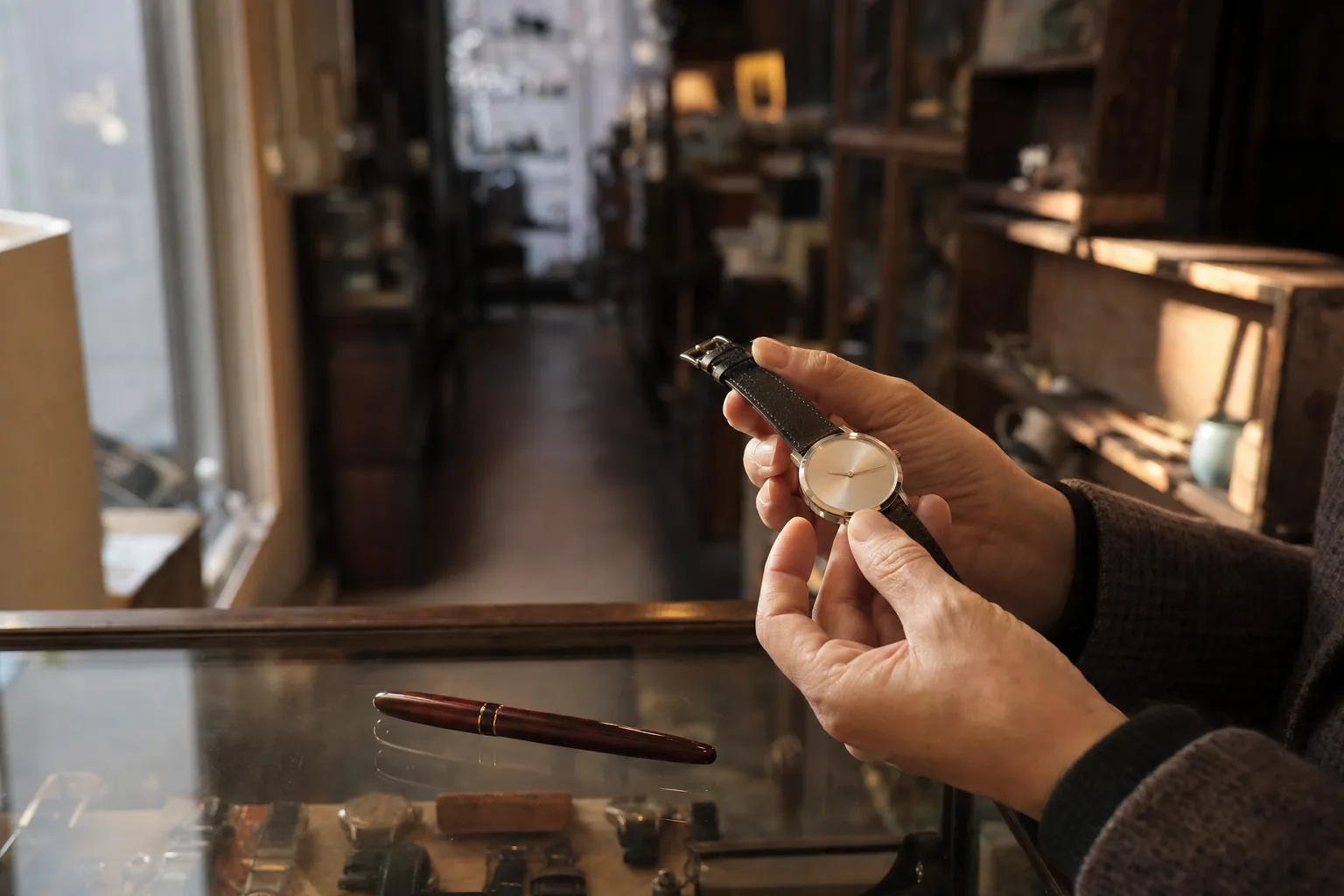
Grand Seiko is the clear leader in Japanese luxury watches, and the Spring Drive caliber is the mechanical argument for why. According to Grand Seiko's own history, the Spring Drive is powered entirely by a wound mainspring — no battery — yet achieves accuracy through a quartz oscillator and integrated circuit working in tandem. The result is a second hand that does not tick or beat; it moves in a continuous, uninterrupted sweep.
The mechanism works as follows: as the mainspring unwinds, it drives a component called the glide wheel. The glide wheel interacts with a stator to generate a small electrical current, which activates a quartz oscillator vibrating at 32,768 Hz. An integrated circuit compares that reference signal against the actual rotation speed of the glide wheel and applies an electromagnetic brake to keep it steady. The system — Grand Seiko calls it the Tri-Synchro Regulator — harmonizes mechanical, electrical, and electromagnetic energy. Standard Spring Drive calibers hold approximately ±1 second per day; the advanced 9RA series and 9R01 reach roughly ±10 seconds per month.
The development timeline is worth stating precisely, because it is often misquoted. Engineer Yoshikazu Akahane conceived the idea in 1977. It took 28 years and approximately 600 prototypes before the movement reached production in 1999 under the Seiko name, with Grand Seiko-branded Spring Drive pieces following in subsequent years.
On specific references: the SBGW231 — a 37.3mm manual-wind Elegance piece running caliber 9S64 with a 72-hour power reserve — was replaced in January 2024 by the SBGW301. The SBGW301 is currently listed at USD $5,000 on Grand Seiko's own site, with the 37mm case, caliber 9S64, and approximately 72-hour power reserve carried over from its predecessor. The SBGW231 remains significant as the reference it superseded, and examples still trade actively on the secondary market. For a deeper look at how Grand Seiko and other Japanese precision instruments are positioned, the companion piece on Japanese watches, pens, and eyewear covers the broader field in detail.
Which Japanese pen brand leads the category, and what do Namiki Yukari Royale Maki-e pens actually cost?
Namiki, the luxury sub-brand of Pilot, leads the Japanese writing instrument category by a significant margin. The Yukari Royale line sits at the top of the Namiki range — smaller in profile than the Emperor models but carrying the same level of maki-e artistry. Each pen is hand-finished by artisans of the Kokkokai group, which has worked with Namiki since 1926.
The production process is not a figure of speech. More than three months are required to complete a single Yukari Royale, with some pieces going through the lacquering, drawing, sprinkling, and polishing cycle up to 130 times. The Lioness and Cubs model — a maki-e piece listed at Chatterley Luxuries — is priced at $7,000 USD. The Parrot with Peach, created by maki-e artist Maseru, reaches $8,000 USD. Each carries an 18k gold nib and comes packaged in a wooden presentation box.
These prices are for pieces available through international specialist retailers. In Japan, the domestic market has access to colorways, limited editions, and Emperor-class pieces that do not reach Western pen dealers at all — or reach them in quantities of one or two per year. The pen category, like the watch category, rewards access to the domestic market rather than waiting for international allocation.
Sourcing a specific Namiki Yukari Royale from Japan's domestic market is exactly the kind of request FindLuxuryJapan handles — describe the model, set a budget, and the Tokyo team locates it.
Which Japanese skincare brand tops the ranking, and what is Clé de Peau Beauté's Synactif Cream actually priced at?
Clé de Peau Beauté is the category leader in Japanese luxury skincare. It is a Shiseido brand, founded in 1982, and its Synactif line represents the absolute ceiling of the range. The Synactif Cream — a night cream formulated with the brand's proprietary Purifying Beautifier, neem leaf extract, retinol ACE, and scented with the rare Rose Synactif — is priced at ¥160,000 for 40ml. At mid-2026 exchange rates, that is roughly $1,050 USD for a jar of face cream.
The Synactif Eye Cream sits at ¥58,000 and the Synactif Nighttime Moisturizer at ¥35,000. The full system, used as Clé de Peau intends, represents a significant ongoing investment. The brand is available in the US — Bloomingdale's and Macy's both stock the Synactif Cream — but the complete domestic Japanese range, including limited-edition Synactif coffrets valued at ¥100,000 or more, is not consistently available outside Japan. For more on the Japanese luxury beauty landscape, the guide to Japanese luxury beauty and personal care covers the wider field including makeup and fragrance.
Which Japanese brands lead in fashion, leather goods, and jewellery?
In fashion, Issey Miyake is the most globally recognized Japanese luxury name, and within the house, two lines are the most sought-after in Japan specifically. Pleats Please, launched in 1993, uses a patented garment-pleating technique that produces permanently pressed fabric — machine washable, packable, and produced in colorways and seasonal prints that are Japan-exclusive or released in Japan months ahead of international markets. Bao Bao Issey Miyake, the geometric bag line built from triangular vinyl patches over a mesh base, became an independent label in 2010 and is consistently cheaper in Japan than in the US, making it a practical target for buyers accessing the domestic market.
In jewellery, Mikimoto holds the heritage position. The brand has been producing cultured pearls since the late nineteenth century and remains the reference point for Japanese pearl jewellery internationally. Tasaki occupies the contemporary end of the same category — its Balance and Danger lines use akoya pearls in architectural settings that have attracted a younger collector base. Both brands have domestic collections that do not reach their international boutiques in full.
In leather goods, the domestic market rewards patience. Brands like Ganzo and Sonne produce full-grain leather goods — wallets, briefcases, card holders — using Japanese tanning methods that are genuinely difficult to source outside specialist Japanese retailers. These are not household names internationally, which is precisely why they appear here: the domestic market is the only market, and accessing it requires either being in Japan or working with someone who is. The lifestyle guide to Japanese luxury shoes, leather, and fashion covers these categories with specific brand and retailer recommendations.
Which Japanese automotive brand belongs in a luxury ranking, and why?
Lexus is the answer, specifically the LC 500. The LC500 Pinnacle Edition is priced at ¥17,800,000 (around $121,500 USD), with production limited to 100 units of each body style, offered exclusively in Japan. The LC 500h hybrid has already been discontinued in North America, while the hybrid remains on sale in Japan. The LC 500 is assembled at the Motomachi Plant in Toyota City, and its interior finish — the hand-stitched leather, the layered dashboard materials — is consistently cited by reviewers as a benchmark for Japanese automotive craft.
The Pinnacle Edition's Japan exclusivity is not marketing. It reflects a production reality: 200 units total, allocated to a domestic market where the LC has a loyal following and where Lexus's heritage positioning carries more weight than in export markets. For a fuller account of the automotive category, the guide to Japanese luxury car brands covers Lexus alongside other domestic marques.
How do these category leaders compare when ranked against each other?
| Category | Brand / Product | Reference / Model | Verified Price (Japan domestic) | Available outside Japan? |
|---|---|---|---|---|
| Watches | Grand Seiko | SBGW301 (replaces SBGW231) | USD $5,000 (worldwide, as of mid-2026) | Yes, but Japan-exclusive dials exist |
| Pens | Namiki (Pilot) | Yukari Royale Maki-e (e.g. Parrot with Peach) | ~$7,000–$8,000 USD | Partial — domestic editions not exported |
| Skincare | Clé de Peau Beauté | Synactif Cream (40ml) | ¥160,000 (~$1,050 USD, mid-2026) | Partially — full domestic range not exported |
| Fashion | Issey Miyake | Pleats Please / Bao Bao | Lower than US retail; Japan-exclusive colorways | Partial — Japan-only releases exist |
| Automotive | Lexus | LC 500 Pinnacle Edition | From ¥17,800,000 (~$121,500 USD) | No — Japan-only, 100 units per body style |
The pattern across every category is the same: the best version of the product is harder to reach from outside Japan, whether because of limited allocation, Japan-exclusive production runs, or a domestic range that simply does not appear in international retail channels.
Why are the top-ranked versions of these products harder to find outside Japan?
Three separate mechanisms create the gap. The first is allocation: Grand Seiko produces Japan-exclusive dial variants — Shinshu-region seasonal dials, Micro Artist Studio pieces — in quantities that are absorbed by the domestic market before international distributors receive any. The second is production capacity: a Namiki Yukari Royale takes more than three months to complete, and the Kokkokai artisan group is small. The total annual output is limited, and Japanese retailers and collectors have first claim. The third is regulatory and commercial: the Lexus LC 500h was dropped in North America not because of production limits but because demand was insufficient to justify the import certification cost. In Japan, where the hybrid makes commercial sense, it remains available.
None of these mechanisms are accidental. The Japanese domestic luxury market is large enough to absorb significant production runs on its own terms. Brands that produce for that market first — and export the remainder, if any — are not being deliberately exclusive. They are simply serving their primary customer base.
Accessing that market from outside Japan requires either a physical presence in Japan or a sourcing relationship with someone who has one. The secondary market — covered in detail in the complete guide to buying second-hand luxury in Japan — is one route, particularly for watches and pens where pre-owned condition standards are high and authentication is well-established. New retail is another, for items that are simply unavailable through international channels at any price.


